
“I Eat Healthily and Exercise, So Why Is My Belly Fat Not Reducing?”
It is one of the most common frustrations we hear. You have cleaned up your diet, you walk, run or lift several times a week, and the scales may even be moving in the right direction. Yet when you look in the mirror, your midsection seems stubbornly unchanged. If this sounds familiar, you are not lazy and you are not doing anything obviously wrong.
The truth is that belly fat behaves differently from fat elsewhere on the body. Understanding the difference between general weight loss and stubborn fat reduction is the first step towards realistic expectations and a plan that actually works.
When you lose weight, your body draws fat from all over according to its own priorities, not from wherever you would like it to disappear. Some areas respond quickly, while central depots around the abdomen are often the last to shift. This is why two people can lose the same amount of weight and yet look very different around the waist.
In this guide we explain why belly fat is so resistant, what diet and exercise can and cannot realistically achieve, and how non-surgical treatments such as cryolipolysis compared with diet and exercise can help address pockets of fat that simply refuse to budge.
Why Belly Fat Is So Difficult to Reduce
Stubborn belly fat is not a failure of willpower. It reflects a complex interplay of biology, hormones and lifestyle. Here are the main reasons it clings on.
Genetics and fat distribution
Where your body stores fat is largely inherited. Twin and family studies show that heredity accounts for a substantial share of variation in both overall body fat and where it settles, including a tendency towards central, abdominal storage. Some people are simply predisposed to an “apple” shape, storing fat around the trunk rather than the hips and thighs.
Hormonal factors
Hormones profoundly influence fat storage and mobilisation. In women, the fall in oestrogen around menopause shifts fat from the hips towards the abdomen, which is why many women notice increased belly fat despite unchanged habits. Chronic stress raises cortisol, which encourages central fat deposition and cravings for energy-dense foods. Insulin resistance, common with a sedentary lifestyle, also favours storage of visceral fat, as summarised in this review of abdominal obesity and its metabolic consequences.
Visceral versus subcutaneous fat
Abdominal fat comes in two forms. Subcutaneous fat sits just beneath the skin, the layer you can pinch. Visceral fat lies deeper, surrounding the organs. Visceral fat is metabolically active and strongly linked to insulin resistance, fatty liver and cardiovascular risk, while subcutaneous fat is the more visible, pinchable layer that often feels most stubborn.
Lifestyle factors
Poor sleep, chronic stress and long periods of sitting all encourage central fat gain. Research shows that even short-term sleep restriction can increase abdominal fat, with one controlled study reporting an 11 percent rise in visceral fat after two weeks of restricted sleep, independent of overall weight change.

Why Diet and Exercise May Not Remove Stubborn Fat
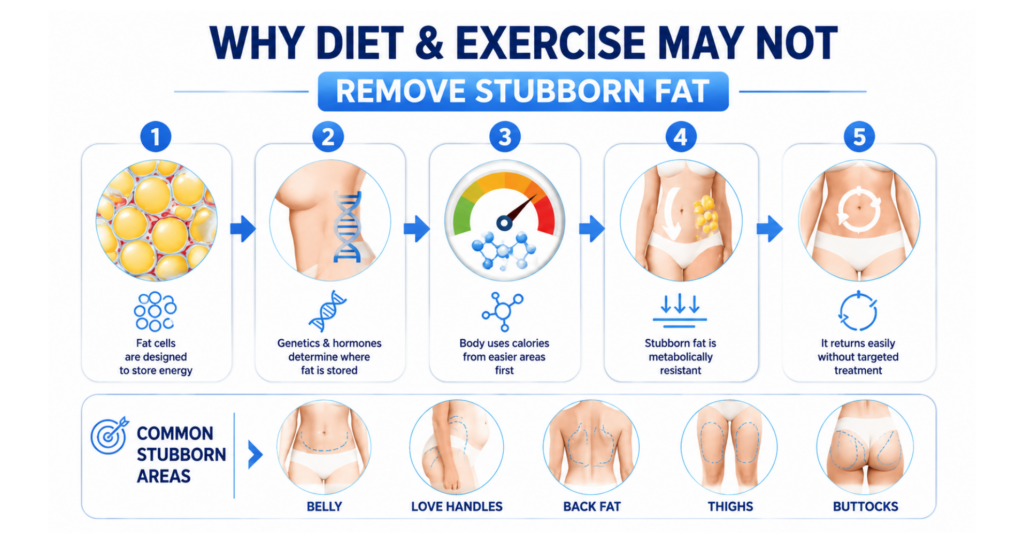
Diet and exercise are essential for good health and genuinely do reduce visceral fat over time. So why can the belly still look unchanged?
Spot reduction is a myth
No amount of crunches, planks or sit-ups will burn fat from directly above the muscles being worked. Fat is released through the bloodstream and used for energy wherever the body needs it. A meta-analysis of localised training studies confirmed that exercising a specific area does not preferentially reduce fat there. Abdominal exercises strengthen and tone the core, but they cannot melt away overlying fat.
Your body defends its energy stores
As you lose weight, your metabolism adapts. Resting energy expenditure falls and unconscious daily movement often decreases, a phenomenon known as adaptive thermogenesis. This is why progress that felt quick at first slows to a frustrating plateau, and the abdomen, being a heavily defended depot, is often the slowest to respond.
Genetics set the order of fat loss
Even with a perfect deficit, your body decides which fat to burn first. For many people, the face, arms and legs slim down while the belly holds on until much later. This is normal physiology, not a sign that something is wrong with your programme.
It is important to be realistic here. Diet and exercise remain the foundation of health and will improve your metabolic markers long before your waistline visibly changes. But for genuinely stubborn pockets of fat, sometimes an additional, targeted approach is needed.
You cannot choose where your body burns fat first. For many people, the belly is simply the most stubborn, most defended depot of all.
How Fat Freezing (Cryolipolysis) Helps With Stubborn Belly Fat
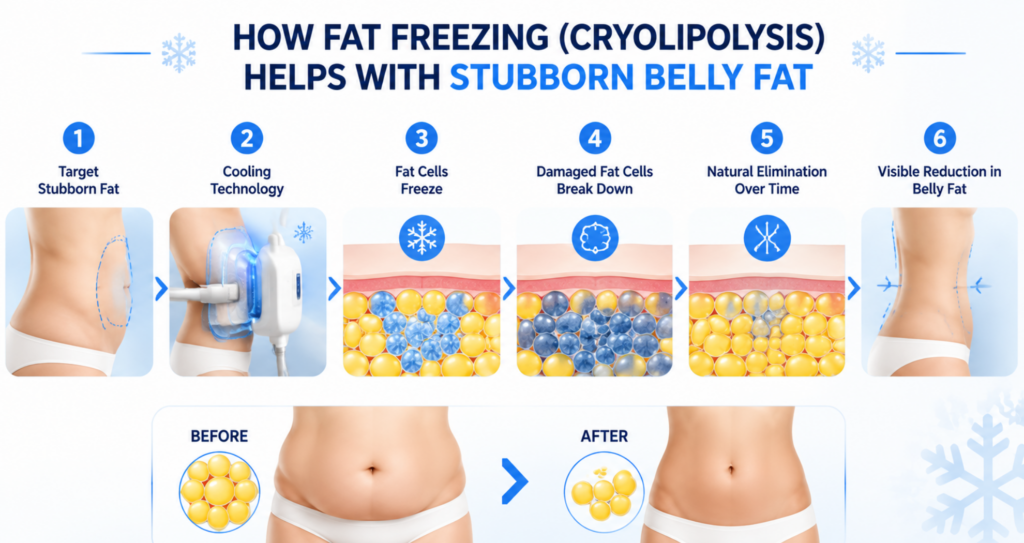
Cryolipolysis, commonly known as fat freezing, is a non-surgical treatment designed specifically for pockets of stubborn fat that resist diet and exercise. It offers a different approach from weight loss, targeting the areas your body refuses to slim on its own.
How controlled cooling targets fat cells
Fat cells are more vulnerable to cold than surrounding skin, nerves and muscle. During treatment, a controlled cooling applicator is applied to the target area, gently lowering the temperature of the fat cells beneath the skin without damaging the tissue around them. This precise cooling triggers the fat cells to break down.
How the body naturally eliminates treated fat cells
Once the fat cells are affected by the cold, they are gradually broken down and cleared away by the body’s own natural processes over the following weeks and months. This is why results appear progressively rather than overnight. You can learn more in our overview of the science behind cryolipolysis and fat freezing.
Why it is different from weight loss
Weight loss shrinks fat cells throughout the entire body, but the number of fat cells stays roughly the same. Cryolipolysis reduces the number of fat cells in a specific treated area. This targeted action is what makes it so useful for stubborn belly fat, love handles and other localised pockets. Fat Freezing is an FDA-cleared technology, and at our clinic it is delivered as part of a personalised, consultation-led plan.
Fat Freezing vs Traditional Weight Loss
Cryolipolysis is not a substitute for a healthy lifestyle, nor is it a weight-loss treatment. The two work in different ways and suit different goals. The table below highlights the key differences.
| Traditional Weight Loss | Fat Freezing (Cryolipolysis) | |
|---|---|---|
| Purpose | Reduce overall body weight and improve health | Reduce a specific, stubborn pocket of fat |
| Target area | Whole body, decided by your genetics | Chosen area such as the belly, flanks or arms |
| Results timeline | Gradual over months of sustained effort | Visible changes typically over several weeks to a few months |
| Suitable candidates | Anyone wishing to lose weight and improve health | People near their target weight with isolated stubborn fat |
For a deeper comparison, see our detailed article on why stubborn fat stays despite diet and exercise.
Is Non-Surgical Fat Freezing Right for You?
Benefits
- Targets specific stubborn areas that diet and exercise leave behind
- Non-surgical, with no incisions, anaesthetic or downtime
- FDA-cleared technology delivered under professional guidance
- Reduces the number of fat cells in the treated pocket
- Ideal for people already near their goal weight
Considerations
- Not a weight-loss treatment or a substitute for healthy habits
- Results appear gradually rather than instantly
- Best suited to isolated pockets rather than large amounts of fat
- A healthy lifestyle is still needed to maintain results
- A consultation is essential to confirm suitability

Expected Results and Timeline
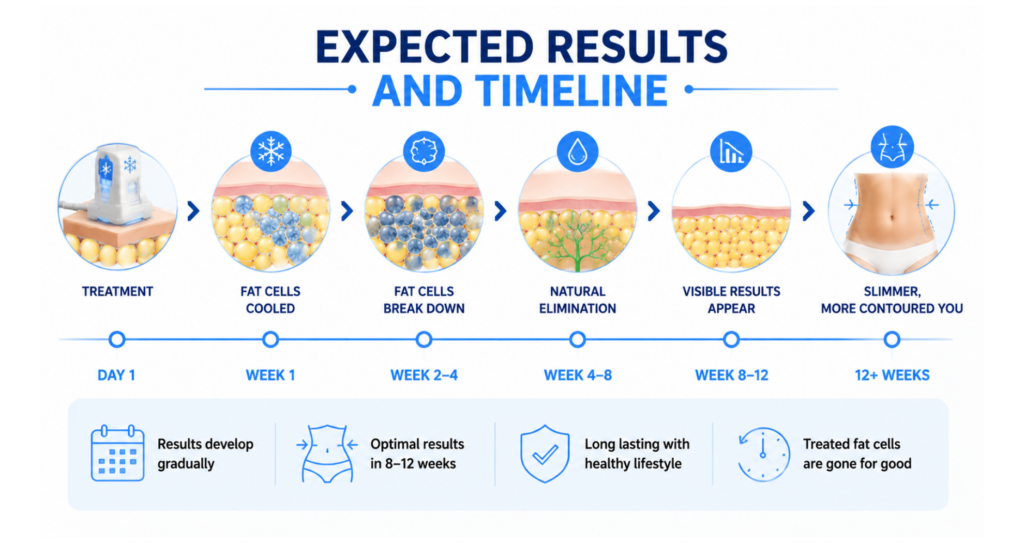
One of the most common questions is how quickly you will see a difference. Because cryolipolysis relies on your body’s natural clearing processes, patience is important.
When changes appear
Some people begin to notice a subtle change within a few weeks, but the most visible results usually develop over roughly two to three months as the body gradually removes the treated fat cells. For some, a second session may be recommended for the best outcome.
Factors affecting results
- The size and location of the fat pocket being treated
- Your individual metabolism and how quickly your body clears fat cells
- Whether you maintain a stable, healthy weight afterwards
- The number of sessions performed on the area
Realistic expectations
Cryolipolysis reduces stubborn fat in a treated area, but it does not tighten loose skin or replace the benefits of a healthy lifestyle. The results can be long-lasting, provided you maintain your weight, as we explain in our guide to whether fat freezing results are permanent. Setting realistic expectations from the outset leads to the greatest satisfaction.
Who Is a Good Candidate for Fat Freezing?
Cryolipolysis works best for people who are close to their ideal weight but troubled by specific pockets of fat that will not shift. It is a body-contouring treatment, not a weight-loss solution.
You may be a good candidate if you:
- Are near your target weight but have stubborn, pinchable fat
- Have tried diet and exercise without shifting a particular area
- Want a non-surgical option with no downtime
- Have realistic expectations about gradual results
- Are in generally good health
Fat freezing may be less suitable if you:
- Are looking for significant overall weight loss
- Have very large amounts of fat in the target area
- Have loose skin that needs tightening rather than fat reduction
- Have certain medical conditions affected by cold
The belly is one of the most popular and rewarding treatment zones, but it is not the only one. You can explore which fat freezing areas give the best results to see how the abdomen compares with love handles, arms and thighs.
Why Choose Fat Freezing Clinic Mumbai
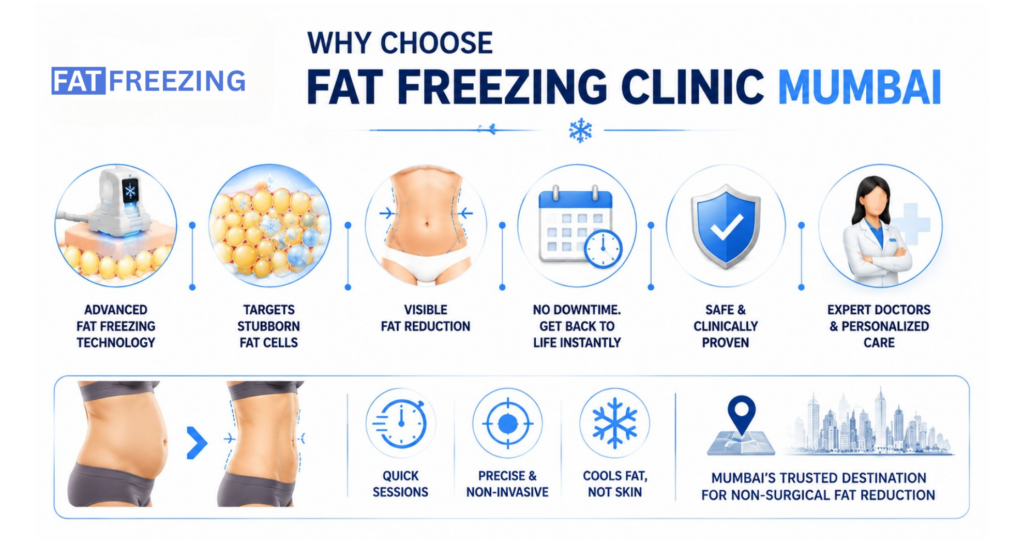
At Fat Freezing Clinic in Mumbai, we offer safe, non-surgical body-contouring treatments to reduce stubborn fat using advanced cryolipolysis technology. Our approach is built around care, honesty and results you can trust.
A consultation-based approach
Every journey begins with a proper consultation. We assess your goals, examine the areas you are concerned about and give you an honest opinion on whether fat freezing is right for you. We will never recommend a treatment that is unlikely to help.
Personalised treatment planning
No two bodies are the same. We tailor the number of sessions, applicator placement and treatment areas to your individual anatomy and goals, whether that is the belly, flanks or beyond.
Professional guidance
Safety is our priority. Treatments are delivered with careful professional oversight, and we take the time to explain what to expect at every stage. If you have concerns about safety, our article on fat freezing safety, side effects and risks answers common questions. We also help you plan how to maintain your results after non-surgical fat reduction.
The Bottom Line: Stubborn Belly Fat Explained
If your belly fat is not reducing despite a genuine effort with diet and exercise, you are not doing anything wrong. Your genetics, hormones, age and lifestyle all influence where fat is stored and how readily it is released, and the abdomen is often the most defended, slowest-responding area of all.
Diet, exercise, good sleep and stress management remain the foundation of health and will steadily reduce your visceral fat and improve your metabolic markers. But for genuinely stubborn, pinchable pockets that refuse to shift, a targeted, non-surgical option such as cryolipolysis can make a real difference.
If stubborn belly fat is affecting your confidence, book a consultation with Fat Freezing Clinic in Mumbai. We will give you an honest assessment and a personalised plan to help you achieve the contour you have been working towards.
Why is my belly fat not reducing even though I exercise and eat well?
Belly fat is influenced by genetics, hormones, sleep and stress, not just calories. Your body decides which fat to burn first, and the abdomen is often the last and most defended area. Metabolic health usually improves before your waistline visibly changes.
Can crunches or sit-ups burn belly fat directly?
No. Spot reduction is a myth confirmed by research. Abdominal exercises strengthen and tone the core muscles but cannot burn the fat sitting above them. Fat is released from all over the body for energy, not from the specific area being worked.
Is fat freezing a weight-loss treatment?
No. Cryolipolysis is a body-contouring treatment that reduces specific pockets of stubborn fat rather than lowering overall body weight. It works best for people already near their target weight who have isolated areas that diet and exercise have not shifted.
How does cryolipolysis remove stubborn belly fat?
A controlled cooling applicator lowers the temperature of fat cells beneath the skin, triggering them to break down. Over the following weeks, your body naturally clears these treated cells away. This gradual process reduces the number of fat cells in the treated area.
How long does it take to see results from fat freezing?
Some people notice subtle changes within a few weeks, but the most visible results typically develop over two to three months as the body eliminates the treated fat cells. Results depend on the area, your metabolism and whether you maintain a stable weight.
Is fat freezing safe?
Cryolipolysis is a non-surgical, FDA-cleared technology with no incisions or downtime. When performed by trained professionals following a proper consultation, it has a strong safety record. A consultation ensures the treatment is suitable and safe for your individual circumstances.
Does menopause make belly fat harder to lose?
Yes. Falling oestrogen levels around menopause shift fat storage from the hips towards the abdomen, so many women notice increased belly fat despite unchanged habits. It is still possible to reduce it with resistance training, good sleep, and targeted treatments where appropriate.
Will my results from fat freezing be permanent?
The treated fat cells are permanently removed, but remaining fat cells can still enlarge if you gain weight. Maintaining a stable, healthy weight with balanced eating and regular activity is essential to keep your results long-lasting after treatment.
Can I lose belly fat without losing much overall weight?
Yes. Body recomposition through resistance training and adequate protein can reduce fat while preserving muscle, keeping scale weight fairly stable. Targeted treatments such as cryolipolysis can also reduce a specific pocket of fat independently of overall weight change.
Who is not suitable for fat freezing?
Fat freezing is not ideal for significant overall weight loss, very large fat deposits, or loose skin that needs tightening rather than fat reduction. Certain cold-sensitive medical conditions may also make it unsuitable, which is why a consultation is essential before treatment.

 WhatsApp
 Call Now
 Consultation