
Is CoolSculpting Safe? Side Effects and Risks of Fat Freezing Treatment Explained
If you are considering fat freezing treatment in Mumbai, one of the first questions you are likely to ask is simple: is it safe? The short answer is that cryolipolysis, often called coolsculpting treatment or fat freezing, is generally considered safe for suitable candidates when it is carried out by a trained practitioner using approved equipment. However, like any cosmetic procedure, it still comes with limits, side effects, and a small number of risks.
This matters because fat freezing is often marketed as quick and easy. In reality, good treatment planning, honest screening, and realistic expectations are what make the experience safer and more satisfactory. For people with small, stubborn pockets of fat around the abdomen, flanks, thighs, arms, or under the chin, it can be a non-surgical option for body contouring. It is not a weight-loss treatment, and it is not right for everyone.
In this guide, we explain the evidence around cryolipolysis safety, common fat freezing side effects, rare complications, and who should avoid treatment. We also cover what to look for in a clinic in Mumbai, including the importance of proper consultation and aftercare. If you want a broader overview of treatment expectations, you can also read our guide to fat freezing side effects and our article on how long fat freezing results last.
What is fat freezing treatment?
Fat freezing treatment is a non-surgical body contouring procedure that uses controlled cooling to target fat cells beneath the skin. The process is known medically as cryolipolysis. Fat cells are more vulnerable to cold than surrounding tissues, so carefully controlled cooling can damage these cells while leaving nearby skin and structures largely unaffected. Over time, the body clears the treated fat cells naturally.
The technology behind cryolipolysis has been studied in published medical literature, including peer-reviewed research available through PubMed. A widely cited review found that cryolipolysis has a favourable safety profile when used correctly, with most adverse effects being mild and temporary. The treatment has also received regulatory clearance for selected uses in multiple regions, including the United States, where the device category has been FDA-cleared for specific treatment areas.
At clinics such as Fat Freezing Clinic in Mumbai, cryolipolysis is typically offered as a non-invasive option for patients who want targeted reduction of resistant fat without surgery or long recovery time. That said, the provider, the device, and the patient selection all matter.
Is coolsculpting treatment safe?
For the right person, yes, coolsculpting treatment is usually safe. Clinical studies and post-market data suggest that serious complications are uncommon, while temporary treatment reactions such as redness, numbness, and swelling are much more common and usually settle on their own. A review published in Aesthetic Surgery Journal reported a low rate of significant adverse events and noted that cryolipolysis does not involve incisions, general anaesthesia, or the surgical risks associated with liposuction.
Still, safe does not mean risk-free. Good clinics should explain both the benefits and the limitations. In practical terms, safety depends on:
- careful medical screening before treatment
- using approved cryolipolysis equipment correctly
- choosing appropriate treatment areas
- setting realistic goals
- providing clear aftercare and follow-up
If you are comparing options, our guide to fat freezing vs liposuction can help you understand how non-surgical body contouring differs from surgery in terms of downtime, invasiveness, and expected results.

How cryolipolysis works and what results to expect
During fat freezing treatment, an applicator draws the targeted area into a cooling cup. The tissue is exposed to controlled cold for a set period. After treatment, the area may be massaged, and the body gradually processes the affected fat cells over the following weeks and months.
Most patients do not see instant change. Results appear gradually, often over two to four months, with some improvement continuing beyond that. Published studies commonly report a measurable reduction in the thickness of treated fat layers after one session, although the exact response varies by person and by area treated. This is why reputable clinics should never promise dramatic or immediate weight loss.
Fat freezing works best for people who are near their stable, healthy weight but struggle with localised fat that does not respond well to diet and exercise. If your main goal is overall weight reduction, other strategies may be more appropriate. You may find our article on why weight loss can be difficult and how fat reduction treatments fit in useful, as well as our guide to fat freezing cost in India if you are planning treatment in Mumbai.
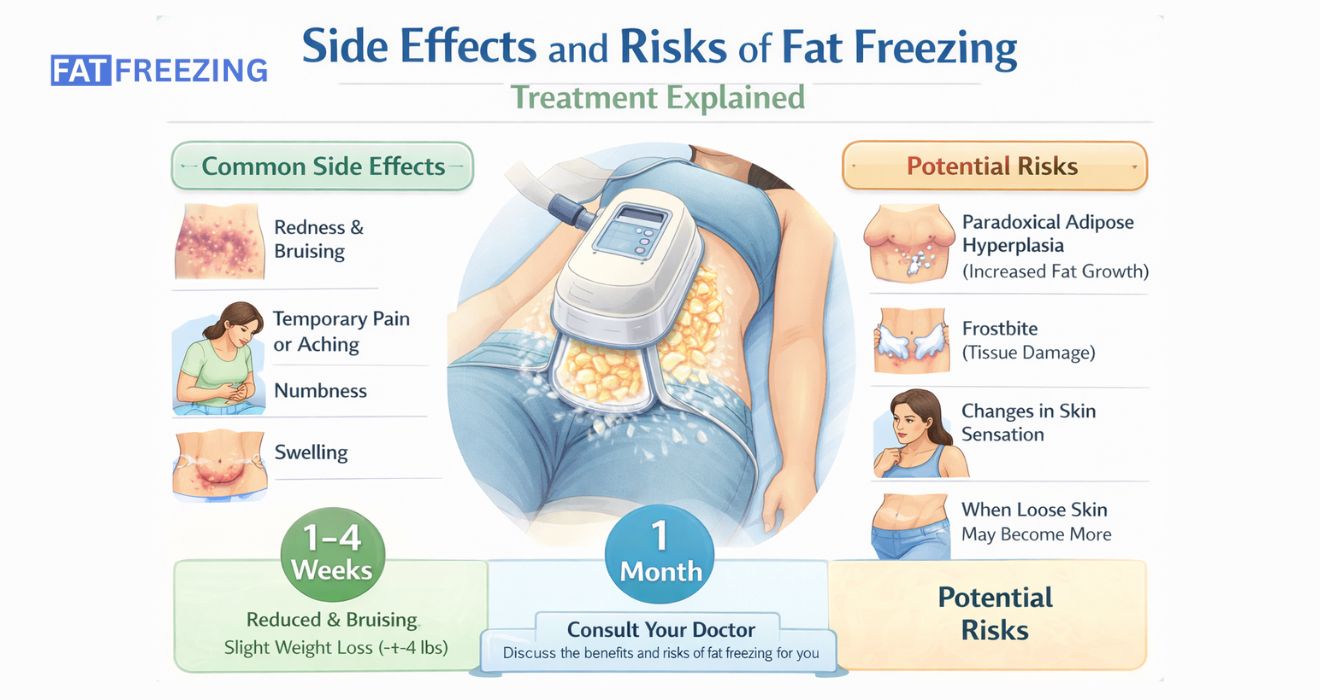
Common fat freezing side effects
The most common fat freezing side effects are temporary and localised to the treated area. These happen because the tissue has been exposed to suction, cooling, and post-treatment massage. Common short-term effects include:
- redness
- swelling
- bruising
- tenderness or aching
- temporary numbness or tingling
- a feeling of firmness in the treated area
- mild cramping or sensitivity
These symptoms often improve over days to a few weeks. Temporary numbness can sometimes last longer than redness or swelling, but it usually resolves without specific treatment. The NHS does not provide a dedicated pathway for cosmetic cryolipolysis, but general cosmetic procedure guidance from reputable bodies consistently stresses the importance of informed consent, proper practitioner training, and understanding recovery expectations.
What does fat freezing feel like?
Patients often describe an initial strong cold sensation, pulling, pressure, and then numbness as the area cools. After the applicator is removed, the area may feel stiff or sensitive. This can be uncomfortable, but many people find it manageable without significant downtime. Most return to normal daily activity the same day.
Rare but important risks of fat freezing
Although uncommon, there are some recognised risks of fat freezing that patients should know before going ahead. The most discussed rare complication is paradoxical adipose hyperplasia, often shortened to PAH. Instead of the treated area reducing, the fat tissue becomes enlarged and firm over time. This is not usually dangerous to general health, but it can be distressing and may need corrective treatment such as liposuction.
PAH appears to be rare, but estimates vary between studies and post-market reports. Published literature, including articles indexed on PubMed, suggests that while it is uncommon, patients should still be told about it clearly as part of consent. Other rare concerns include prolonged pain, contour irregularity, or an unsatisfactory cosmetic result if the wrong area or the wrong candidate is treated.
In simple terms, the main medical safety issue is usually not severe systemic illness. It is poor candidate selection, inadequate counselling, or a disappointing aesthetic outcome. That is why consultation quality matters as much as the machine itself.
Who should avoid fat freezing treatment?
Not everyone is a good candidate for cryolipolysis. Treatment should usually be avoided or carefully reviewed in people with conditions related to abnormal cold sensitivity, including cryoglobulinaemia, cold agglutinin disease, and paroxysmal cold haemoglobinuria. A medical review is also important if you have a hernia near the treatment area, severe skin conditions, impaired sensation, or are pregnant.
You may not be an ideal candidate if:
- you are looking for major weight loss rather than body contouring
- you have unrealistic expectations about one-session results
- you have significant skin laxity and expect tightening rather than fat reduction
- you have untreated medical issues that increase procedural risk
If skin laxity is your main concern rather than localised fat, another non-surgical treatment may be more suitable, such as those discussed in our article on what HIFU treatment is and how it works.
How to reduce the risks and improve safety
| Safety step | Why it matters |
|---|---|
| Choose a qualified clinic | Training and device knowledge reduce avoidable mistakes. |
| Have a full consultation | Screening helps identify whether fat freezing is suitable for you. |
| Discuss medical history honestly | Cold-related disorders and local conditions may be contraindications. |
| Ask about expected results | Realistic goals reduce disappointment and overtreatment. |
| Follow aftercare advice | Simple aftercare can help manage temporary soreness and swelling. |
| Avoid DIY fat freezing | Improvised cooling methods can cause frost injury and skin damage. |
At a reputable provider such as Fat Freezing Clinic in Mumbai, safety should start before the session begins. You should be told what the treatment can and cannot do, what temporary reactions are normal, and when to contact the clinic if symptoms seem unusual.
Fat Freezing Treatment: Benefits and Considerations
Benefits
- Non-surgical treatment with no incisions or general anaesthesia.
- Usually minimal downtime, so many people return to routine activities the same day.
- Can help reduce small, stubborn fat pockets that resist diet and exercise.
- Gradual results may look natural when treatment is planned well.
- Suitable for selected body areas such as the abdomen, flanks, thighs, arms, and chin.
Considerations
- Not a weight-loss treatment and not suitable for obesity management on its own.
- Results are gradual, so patients need patience and realistic expectations.
- Temporary side effects such as swelling, numbness, tenderness, and bruising are common.
- Rare complications like paradoxical adipose hyperplasia can occur.
- Some people need more than one session for the level of contouring they want.
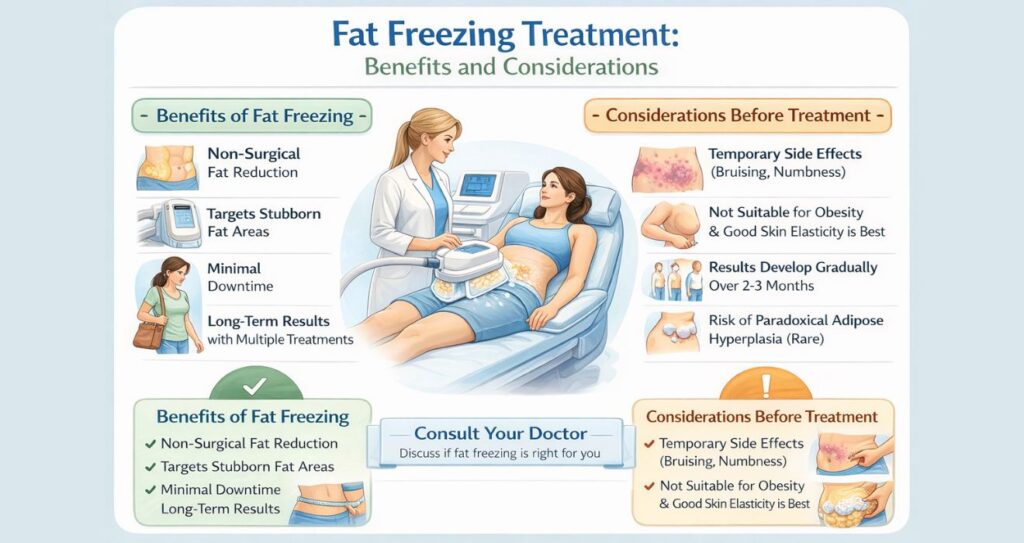
Fat freezing treatment can be a safe option for the right candidate, but safe treatment always starts with honest screening and realistic expectations.
Why clinic choice matters in Mumbai
Mumbai patients have many cosmetic treatment options, but standards can vary. Because cryolipolysis is elective, you should not feel rushed into booking. A trustworthy clinic will explain the treatment plan clearly, review your medical history, discuss possible side effects, and outline alternatives if fat freezing is not the best fit.
It is also reasonable to ask practical questions: Which machine is used? Which body areas are treated? What should I expect during recovery? How are side effects handled? Is there follow-up? A clinic that is transparent about these points is usually taking safety seriously.
If you are comparing non-surgical body contouring options, you may also want to explore our guide to non-surgical body sculpting treatments and our overview of the best weight loss and body contouring options in Mumbai. These resources can help you understand where fat freezing fits within a wider treatment plan.
What to do before and after treatment
Before treatment
- Attend a proper consultation and share your full medical history.
- Discuss whether your concern is fat, loose skin, or general weight gain.
- Review expected outcomes, number of sessions, and costs.
- Take baseline photographs if the clinic recommends them for progress tracking.
After treatment
- Expect temporary redness, numbness, or tenderness.
- Resume light routine activity as advised by your practitioner.
- Keep follow-up appointments so your progress can be assessed properly.
- Contact the clinic if pain is severe, symptoms feel unusual, or the treated area changes unexpectedly over time.
A healthy lifestyle still matters after treatment. Fat freezing reduces selected fat cells in a treated area, but it does not replace sensible nutrition, exercise, or long-term weight management. If you gain significant weight afterwards, your overall body shape can still change.
Final verdict: is fat freezing treatment safe?
Yes, fat freezing treatment is generally safe for appropriately selected patients when performed by a trained provider using proper cryolipolysis protocols. The most common side effects are mild and temporary, such as redness, swelling, bruising, and numbness. Serious complications are rare, but they do exist, and patients should be told about them in a balanced and honest way.
The safest way to approach coolsculpting treatment is to think of it as a medical-grade cosmetic procedure, not a beauty shortcut. Ask questions, check the clinic carefully, and choose a provider who prioritises screening and informed consent. For many patients in Mumbai, that approach makes fat freezing a reasonable non-surgical option for reducing stubborn pockets of fat.
If you are considering treatment, Fat Freezing Clinic in Mumbai offers non-surgical cryolipolysis for targeted body contouring, with consultation-led planning designed to help patients understand both the potential benefits and the realistic limitations before starting.

Is fat freezing treatment safe for most people?
Fat freezing treatment is generally safe for most healthy adults who want reduction of localised fat rather than major weight loss. Safety depends on correct patient selection, proper machine use, and treatment by a trained provider. People with cold-related medical disorders may not be suitable candidates.
What are the most common fat freezing side effects?
The most common fat freezing side effects are redness, swelling, bruising, tenderness, tingling, and temporary numbness in the treated area. These reactions are usually short-lived and settle within days or weeks. Mild discomfort after treatment is common, but severe ongoing pain should be reviewed.
What is the biggest risk of fat freezing?
The best-known rare risk of fat freezing is paradoxical adipose hyperplasia, where the treated area becomes larger and firmer instead of smaller. It is uncommon, but it is an important part of informed consent because it may require corrective treatment to improve the contour.
Is coolsculpting treatment painful?
Coolsculpting treatment is not usually described as severely painful, but it can feel uncomfortable. Most patients notice pulling, pressure, intense cold at first, and then numbness. Afterwards, the area may feel tender or strange for a short time, especially once sensation begins to return.
How long does it take to recover after fat freezing treatment?
There is usually little to no formal downtime after fat freezing treatment, and many people return to work or daily tasks on the same day. However, temporary swelling, numbness, or sensitivity can continue for several days or longer, depending on the area treated and individual response.
Who should not have cryolipolysis?
Cryolipolysis should usually be avoided in people with cryoglobulinaemia, cold agglutinin disease, paroxysmal cold haemoglobinuria, or certain local medical concerns near the treatment area. Pregnancy, active skin issues, and unrealistic expectations may also mean the treatment is unsuitable or should be postponed.
Can fat freezing help with weight loss?
No, fat freezing is not designed as a weight-loss treatment. It is a body contouring procedure intended for stubborn fat pockets in selected areas. If your main goal is overall weight reduction, a doctor-led weight management plan or other medical options may be more appropriate.
How soon will I see results from fat freezing treatment?
Results from fat freezing treatment are gradual rather than immediate. Some patients notice early improvement within a few weeks, but clearer change often takes two to four months. Final outcomes vary, and some people need more than one session for their desired contour.
Is DIY fat freezing safe at home?
No, DIY fat freezing is not safe. Improvised cooling methods can expose the skin and underlying tissue to uncontrolled cold, increasing the risk of frost injury, burns, and uneven results. Professional cryolipolysis devices are designed to control temperature and protect surrounding tissue.
How do I choose a safe fat freezing clinic in Mumbai?
Choose a clinic that offers a proper consultation, explains risks clearly, reviews your medical history, and uses approved cryolipolysis technology. Ask who performs the treatment, what follow-up is provided, and how side effects are managed. A good clinic will prioritise suitability over sales pressure.

 WhatsApp
 Call Now
 Consultation