
Why Fat Loss Is Never One-Size-Fits-All
If you have ever wondered why your partner seems to shed weight from their belly within weeks while your thighs or hips stubbornly refuse to budge, you are not imagining it. Men and women genuinely store and lose fat in different ways, and the science behind this is far more interesting than willpower alone.
These differences come down to a complex interplay of sex hormones, adipose (fat) tissue biology, metabolism and even behaviour. They shape not only how you look but also where your body clings to stubborn fat that survives even the most disciplined diet and exercise routines.
Understanding these cryolipolysis body type differences matters because it explains why a targeted, non-surgical approach often succeeds where conventional methods stall. At our clinic, we use FDA-cleared cryolipolysis (fat freezing) to address these localised, diet-resistant fat pockets in both men and women, tailoring treatment to each individual’s body type and goals.
In this guide, we explain the biology behind sex differences in fat storage, why diet and exercise sometimes fall short, and precisely how fat freezing works to break down fat cells in a way that respects these underlying differences.
Understanding How Your Body Stores Fat
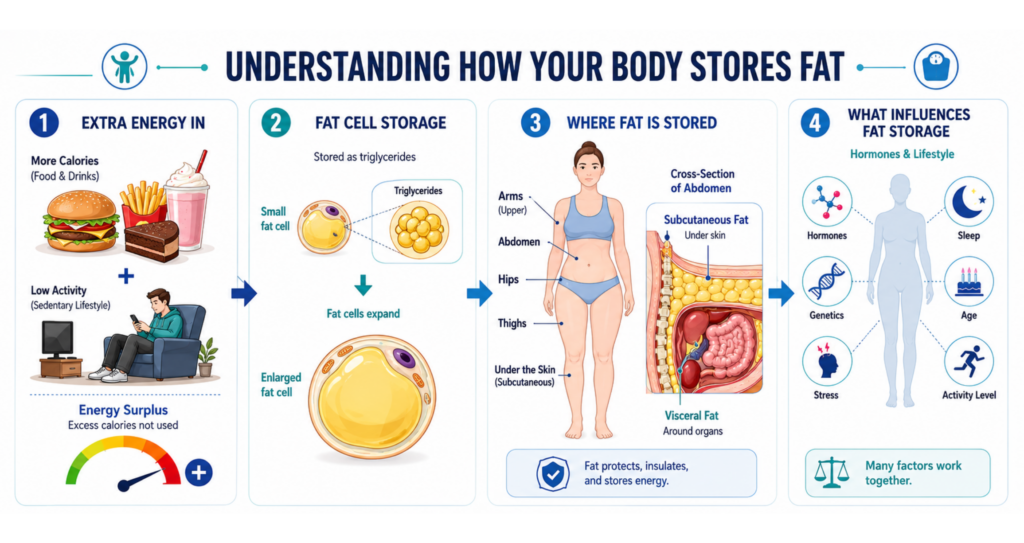
Fat tissue is far more than a passive store of energy. It is a highly active organ that releases hormones, influences your metabolism and communicates with your immune and nervous systems. When it comes to body contouring, two types of fat matter most.
Subcutaneous versus visceral fat
Subcutaneous fat sits just beneath the skin across your abdomen, flanks, thighs, buttocks, arms and back. Because it lies close to the surface, it can be gently pinched, and this is the only type of fat that cryolipolysis can treat.
Visceral fat is packed deep around your internal organs. It is invisible from the outside but is strongly linked to insulin resistance, raised cholesterol and cardiovascular risk, according to published reviews of adipose tissue biology. Visceral fat responds well to diet and exercise but cannot be addressed by fat freezing.
This distinction is crucial. Fat freezing reshapes your silhouette by reducing surface-level bulges; it is a contouring tool, not a treatment for obesity or internal fat.
Gender-based fat storage patterns
Broadly speaking, bodies follow one of two patterns:
- Android (apple-shaped): more common in men, with fat concentrated around the abdomen, chest and upper back, including a higher proportion of visceral fat.
- Gynoid (pear-shaped): more common in women, with fat stored in the hips, thighs and buttocks.
These patterns are driven largely by sex hormones. Research published in reviews of sex differences in adipose tissue shows that oestrogen encourages fat storage in the hips and thighs in women, while testosterone and its metabolites shape the central, abdominal distribution seen in many men.

Why Diet and Exercise Don’t Always Work
You may have followed every rule of clean eating and consistent training, yet certain areas seem immune to change. This is genuinely down to physiology rather than a lack of effort.
Metabolic and muscular differences
Men typically carry more lean muscle mass and have a higher resting metabolic rate, meaning they burn more calories even at rest. This often gives men a faster start when they begin a weight-loss programme. Women’s bodies, by contrast, are naturally inclined to retain a little more fat to support hormonal and reproductive balance, so changes on the scales can feel slower and more gradual.
Hormonal influences
Oestrogen actively protects gluteofemoral fat (the hips, thighs and buttocks) because this depot serves as an energy reserve for pregnancy and lactation. This makes these areas particularly resistant to diet and exercise. As women approach menopause and oestrogen declines, fat storage often shifts towards the abdomen, changing the shape of “stubborn” areas over time.
Regional fat resistance
Certain fat depots have a high density of receptors that discourage fat release, combined with relatively poor blood flow. A study on sex differences in fat mobilisation found that women’s fat cells can be less responsive to fat-burning signals in these protected areas, which is exactly why hips and thighs are so persistent.
The result is what many people describe as “stubborn fat”. If you have been asking yourself why your belly fat isn’t reducing despite diet and exercise, this biology is the answer. It is precisely where cryolipolysis succeeds where lifestyle alone reaches its limit.
Stubborn fat is not a failure of willpower. It is your biology defending energy reserves your hormones consider essential.
How Cryolipolysis Targets Stubborn Fat by Body Type
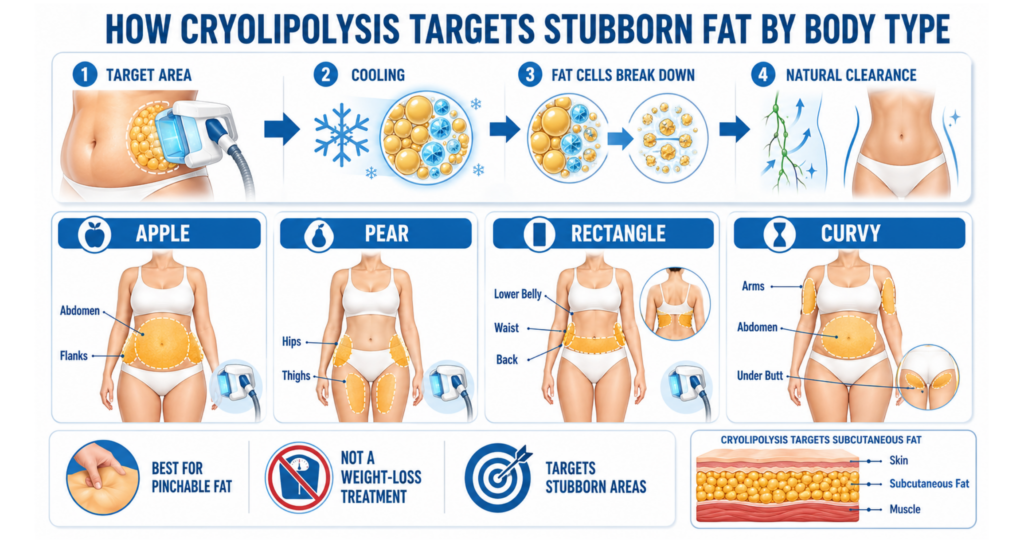
Cryolipolysis, commonly known as fat freezing, works on a beautifully simple principle: fat cells are more vulnerable to cold than the surrounding skin, nerves and muscle. This selective sensitivity allows us to injure and eliminate fat cells without damaging anything else.
The fat-freezing mechanism, step by step
- Assessment: Your practitioner examines the target area, checks your suitability and confirms there is enough pinchable subcutaneous fat to draw into the applicator.
- Application: A protective gel pad is placed on the skin, and a cup-shaped applicator uses gentle vacuum suction to draw the fat and skin into a cooling chamber.
- Controlled cooling: Over roughly 35 to 60 minutes, the tissue is cooled towards freezing. You will feel intense cold and a pulling sensation at first, which fades as the area goes numb.
- Cell death: The cold crystallises the fat cells, triggering apoptosis, a natural, programmed form of cell death.
- Natural clearance: Over the following weeks, your immune system gradually clears away the destroyed fat cells, and the treated layer thins.
This process is explained in detail in research on the clinical use of cryolipolysis, which reports typical fat-thickness reductions of around 10% to 25% per treated area.
Responding to different body areas
Because fat freezing works on subcutaneous fat, treatment is tailored to your body type:
- Gynoid bodies often benefit from treating the inner and outer thighs, hips and buttocks, where oestrogen-protected fat resists diet.
- Android bodies tend to focus on the abdomen and back and flank fat, refining the waistline once visceral fat has been addressed through lifestyle.
- Both sexes commonly treat love handles, upper arms and the double chin.
To understand which areas give the best fat freezing results, a personalised consultation is the best starting point.

Expected Results and Timeline
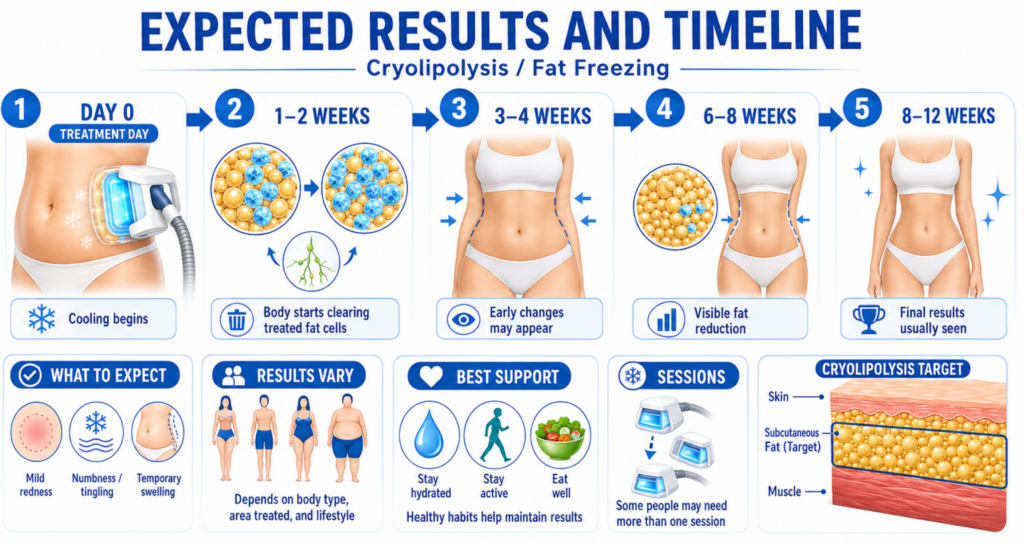
Fat freezing produces gradual, natural-looking changes rather than overnight transformation. Because your body needs time to clear the destroyed fat cells, patience is part of the process.
- Weeks 3 to 4: The first subtle changes begin to appear.
- Weeks 8 to 12: More noticeable reduction becomes visible.
- Around 3 to 4 months: Maximum results from a treatment cycle are typically seen.
Most people benefit from two treatment sessions per area, spaced four to eight weeks apart. The first session addresses the more superficial fat layer, while subsequent sessions reach deeper. Typical reductions reported in systematic reviews of cryolipolysis range from around 15% to 28% in skinfold measurements, with high patient satisfaction.
Because the treated fat cells are permanently removed, results are long-lasting when you maintain a stable weight. You can read more about whether fat freezing results are permanent and how to maintain your results afterwards.
Is Cryolipolysis Right for You?
Benefits
- Non-surgical with no incisions, anaesthesia or downtime
- FDA-cleared technology with a strong safety record
- Permanently eliminates treated fat cells
- Effective on stubborn, diet-resistant fat pockets
- Suitable for both men and women across body types
- Gradual, natural-looking contour improvement
Considerations
- Not a weight-loss treatment or a solution for obesity
- Does not reduce visceral fat or metabolic risk
- Results appear gradually over weeks to months
- Usually requires more than one session per area
- Best suited to those near a healthy weight
- Rare risk of paradoxical adipose hyperplasia, discussed at consultation
Safety, Suitability and Who Makes an Ideal Candidate
Cryolipolysis is widely regarded as a safe, well-tolerated procedure. Most side effects are mild and temporary.
Common, temporary side effects
- Redness, swelling and bruising at the treatment site
- Temporary numbness, tingling or sensitivity, usually resolving within weeks
- Firmness or mild tenderness in the days following treatment
Serious complications are rare. One recognised but uncommon event is paradoxical adipose hyperplasia, where the treated area enlarges rather than shrinks. Research recorded in the study of paradoxical adipose hyperplasia estimates this at roughly one in 20,000 treatments, and it is treatable. We discuss all risks openly during your consultation as part of informed consent.
Ideal candidates
Fat freezing works best for people who are close to their target weight, in generally good health, and troubled by specific, pinchable pockets of stubborn fat. It is not suitable for those with cold-sensitive conditions such as Raynaud’s syndrome, cryoglobulinaemia or cold urticaria.
Curious about how it compares to other options? Our guides on fat freezing versus injections and fat freezing versus weight-loss injections explain the differences clearly. New mothers can also explore cryolipolysis after pregnancy.
Cryolipolysis reshapes your silhouette by permanently removing fat cells, but it works best as a partner to a healthy lifestyle, not a replacement for it.
Why Choose Our Fat Freezing Clinic in Mumbai
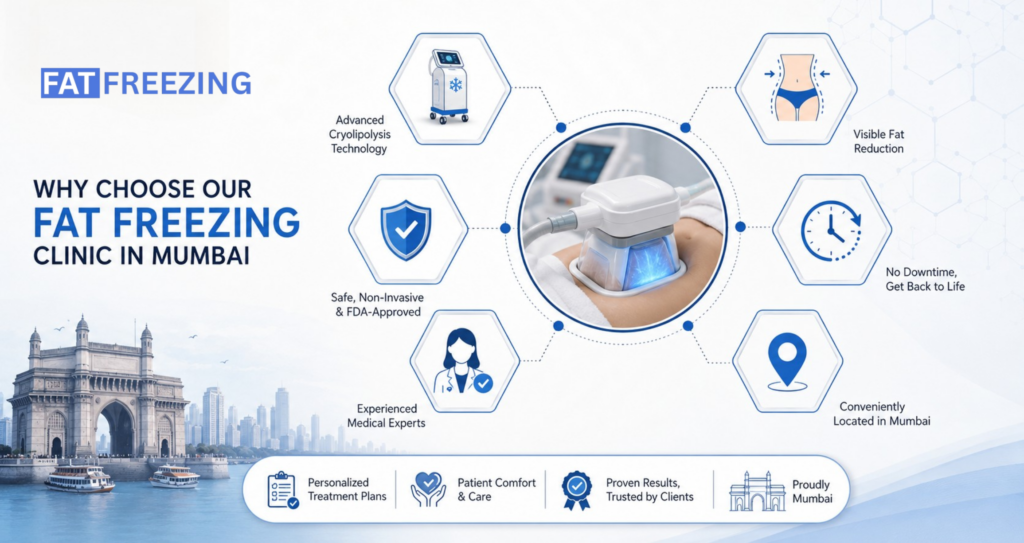
Choosing where to have a body-contouring treatment matters just as much as choosing the treatment itself. At our Fat Freezing Clinic in Mumbai, we provide safe, non-surgical body contouring using advanced, FDA-cleared cryolipolysis technology.
What sets our approach apart:
- Doctor-led consultations: Every treatment begins with a thorough assessment of your body type, fat distribution and goals, so your plan is genuinely personalised.
- Body-type-specific planning: We understand that men and women require different treatment strategies, and we tailor applicator choice, session numbers and target areas accordingly.
- Realistic, honest guidance: We are clear that fat freezing is a contouring tool, and we help you set expectations that match the evidence.
- Advanced technology: Our cryolipolysis systems deliver controlled, monitored cooling for consistent, comfortable treatment.
Whether your concern is a stubborn belly, love handles, thighs, arms or a double chin, our team will guide you towards the right approach for your body. You can also review how much fat freezing costs in India before you book.
Ready to Target Your Stubborn Fat?
Men and women lose fat differently, and understanding your own body type is the first step towards genuinely effective, targeted treatment. Cryolipolysis offers a safe, non-surgical way to reduce the stubborn fat that diet and exercise leave behind, tailored to how your body actually stores fat.
If you are ready to see how fat freezing could reshape your silhouette, we invite you to book a personalised consultation at our Mumbai clinic. Our doctor-led team will assess your body type, discuss your goals and design a treatment plan built around you.
Why do men and women lose fat differently?
Men usually have more muscle mass and a higher resting metabolic rate, so they burn more calories and often lose weight faster initially. Women store more fat in the hips and thighs due to oestrogen, which protects these reserves for reproductive health, making them harder to shift.
Can cryolipolysis remove visceral fat?
No. Cryolipolysis only treats subcutaneous fat, the pinchable layer just beneath the skin. Visceral fat, which surrounds internal organs, cannot be reached by fat freezing and must be addressed through diet, exercise and lifestyle changes to reduce cardiometabolic risk.
How does body type affect my cryolipolysis treatment?
Your body type determines which areas we target. Gynoid (pear-shaped) bodies often focus on the thighs, hips and buttocks, while android (apple-shaped) bodies concentrate on the abdomen and flanks. Your practitioner tailors applicator choice and session numbers to your distribution.
When will I see results from fat freezing?
Results appear gradually. The first subtle changes typically emerge around three to four weeks, become more visible by eight to twelve weeks, and reach their maximum at around three to four months as your body naturally clears the destroyed fat cells.
Are cryolipolysis results permanent?
The treated fat cells are permanently eliminated and will not regrow. However, remaining fat cells can still expand if you gain significant weight. Maintaining a stable weight through a healthy lifestyle helps preserve your contouring results for the long term.
Is fat freezing safe?
Yes. Cryolipolysis is FDA-cleared and well tolerated, with most side effects being mild and temporary, such as redness, swelling and short-term numbness. Serious complications are rare. We discuss all risks fully during a doctor-led consultation before treatment.

 WhatsApp
 Call Now
 Consultation