
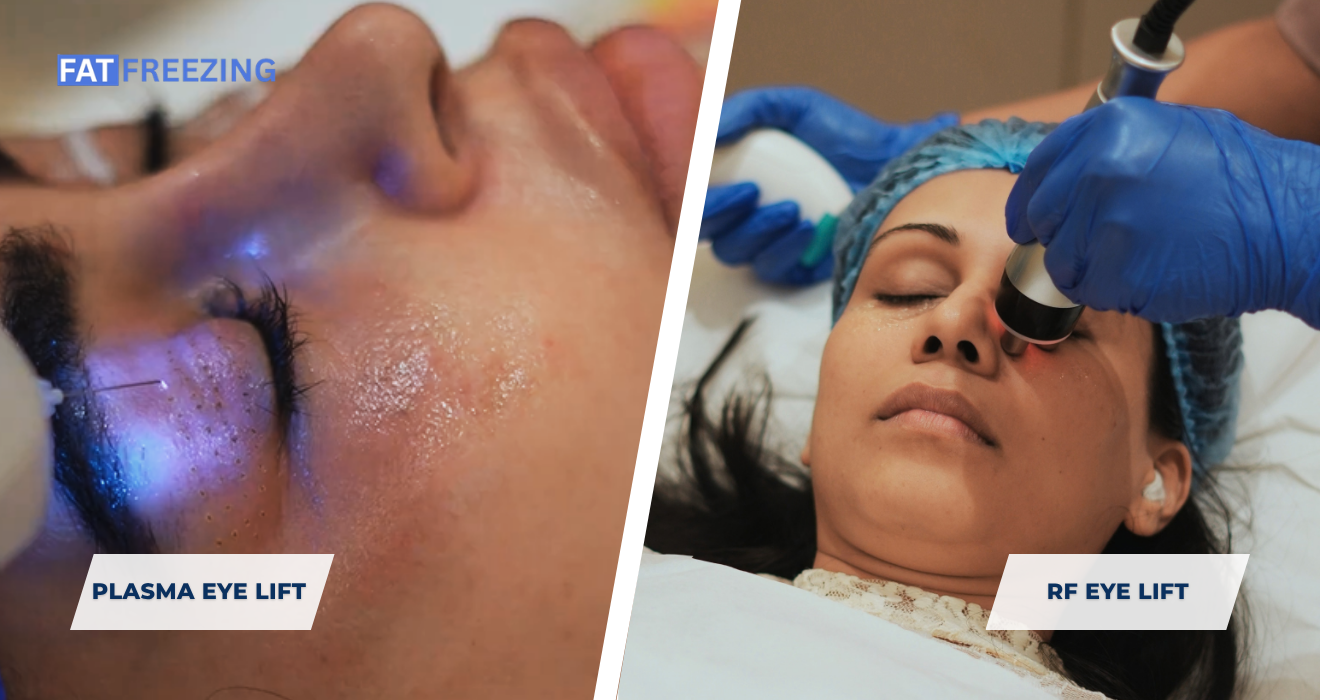
Understanding Non-Surgical Eye Lifts
The skin around the eyes is among the thinnest on the body, so it is often the first area to show fine lines, crepey texture and mild sagging. Understandably, many people would prefer to soften these changes without surgery. Two treatments frequently appear in searches for a non-surgical eyelid lift: the Plasma Eye Lift vs RF Eye Lift.
Both aim to firm and refresh the eye area, but they work in very different ways, carry different risks and suit different concerns. This guide sets out how each treatment works, what the evidence shows and, crucially, how to reason through which option might be appropriate for you. We will not claim either is universally “better” – the right choice depends on your skin type, the nature of your concern and a proper professional assessment.
At Fat Freezing Clinic in Mumbai, our focus is on safe, non-surgical treatments and honest guidance. Whether you are exploring eye rejuvenation or wider body contouring, we believe informed decisions lead to better outcomes.
What Is a Plasma Eye Lift?
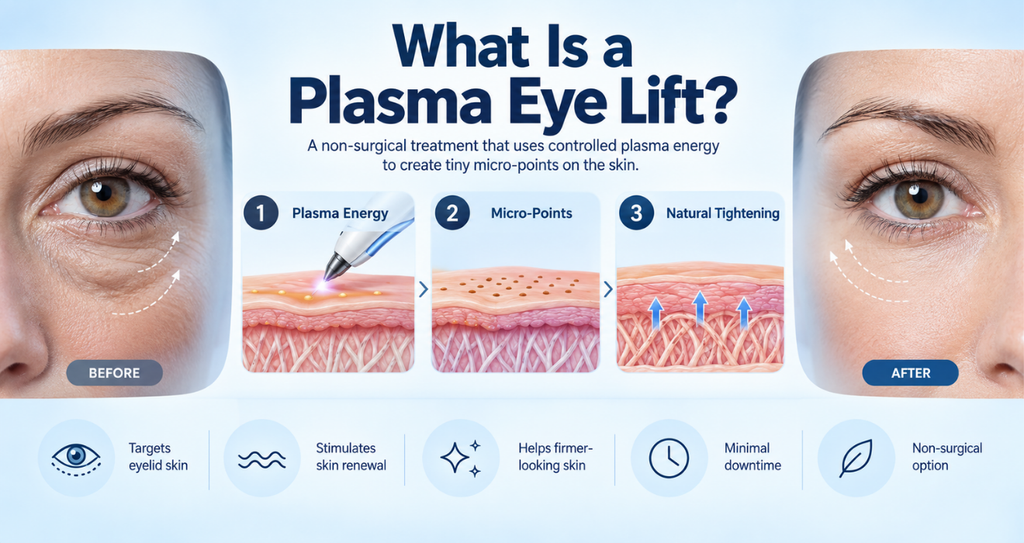
A Plasma Eye Lift uses a handheld plasma device (sometimes called a plasma pen) or a nitrogen plasma system to create tiny, controlled points of energy on the surface of the eyelid skin. When the device tip nears the skin, ionised gas forms a small electrical arc that sublimates a pinpoint of the outer skin layer, leaving a small carbon crust and triggering immediate localised tightening.
Over the following weeks, this controlled micro-injury stimulates the skin’s natural repair response, encouraging fresh collagen production in the upper layers. Small clinical studies and histology reports have shown increased collagen after plasma treatment, which supports its use for surface refinement.
What Concerns Does It Address?
Plasma Eye Lift tends to suit:
- Mild to moderate hooding of the upper eyelid
- Fine lines and crepey texture on thin eyelid skin
- Precise, targeted tightening along specific folds
Because it works chiefly on the surface, it cannot correct significant excess skin, fat herniation (“eye bags”) or a drooping brow – these are structural issues that sit deeper than plasma energy reaches. It is important to note that no handheld plasma pen is FDA-cleared specifically for cosmetic eyelid tightening, and the technology has attracted regulatory caution when used near the eyes. This is why it should only ever be performed by trained medical professionals using regulated, medical-grade equipment. You can read more in our detailed guide to Plasma Eye Lift for periorbital wrinkles.
What Is an RF Eye Lift?
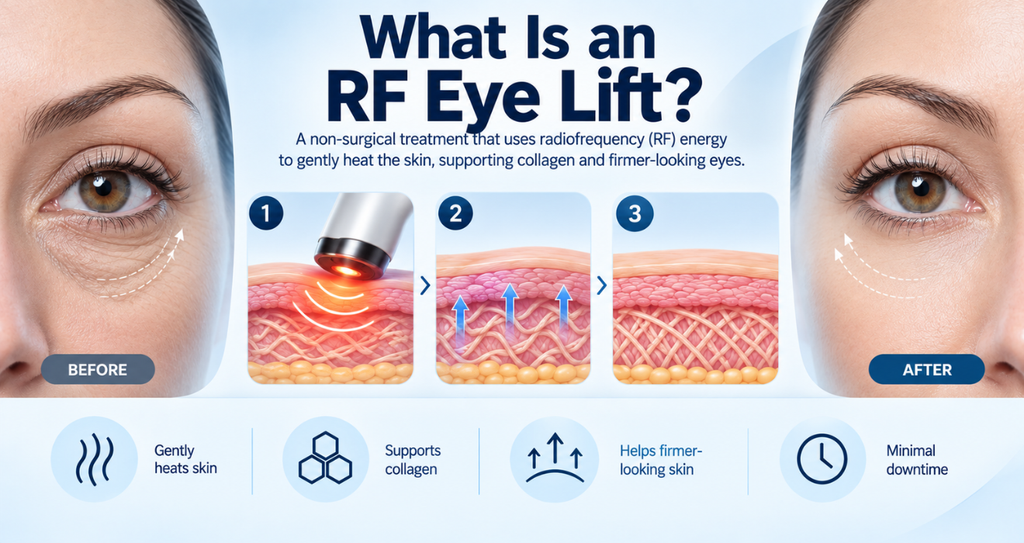
An RF Eye Lift uses radiofrequency energy to gently heat the deeper layers of the skin (the dermis) to a controlled temperature, typically around 40-60°C. This heat causes existing collagen to contract and prompts the body to produce new collagen and elastin over the following months. The result is gradual firming and improved texture.
RF is delivered in two main ways: contact RF, where a handpiece glides across the skin, and RF microneedling, where fine insulated needles deliver energy at a set depth while creating micro-channels that further boost remodelling. Around the eyes, specialised small handpieces and shallow settings are used to respect the delicate anatomy.
What Concerns Does It Address?
RF Eye Lift tends to suit:
- Diffuse fine lines, including crow’s feet
- Under-eye skin tightening and crepey infraorbital texture
- Mild laxity across a broader periorbital and facial area
A notable advantage of RF is its stronger evidence base. A systematic review of RF microneedling across 20 studies and 558 participants found consistent improvements in skin texture and tightening, with patient satisfaction exceeding 90% and no serious complications reported. Many RF platforms are also cleared for facial rejuvenation, giving the modality a more established regulatory footing than plasma pens.
How Both Treatments Work: The Key Difference
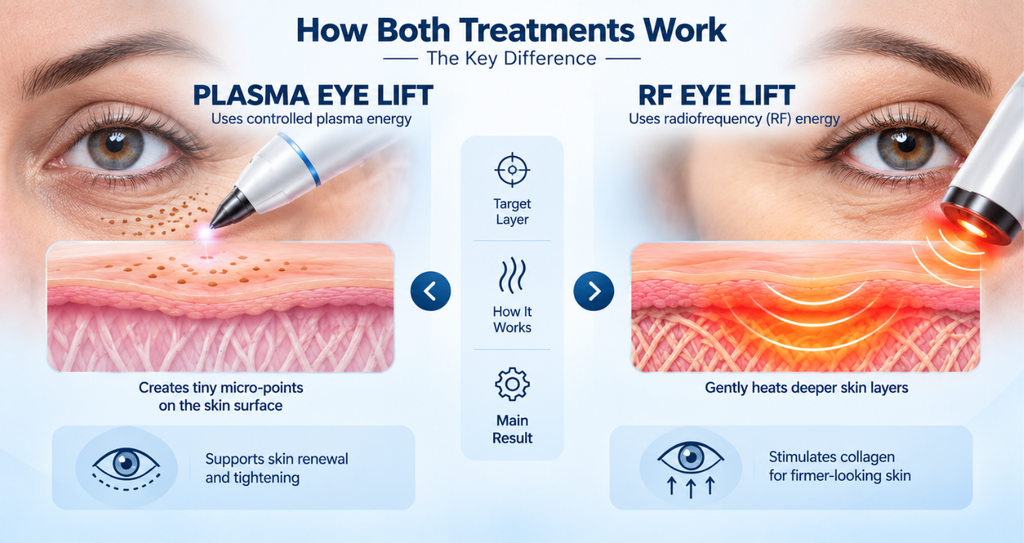
The simplest way to understand the difference is by depth and delivery. Plasma works like a series of tiny, precise surface burns that tighten and resurface the outermost skin. RF works from within, heating the deeper dermis to firm tissue more diffusely and often over a wider area.
This distinction explains almost everything that follows – from downtime and visible crusting to pigmentation risk and which concerns each treatment handles best. Plasma is a surface sculptor; RF is a deeper firmer.
Plasma Eye Lift vs RF Eye Lift: Comparison Table
| Feature | Plasma Eye Lift | RF Eye Lift |
|---|---|---|
| Treatment method | Controlled surface micro-points via plasma arc | Deeper dermal heating via contact RF or microneedling |
| Target concern | Mild hooding, fine lines, crepey surface texture | Diffuse wrinkles, under-eye laxity, broader firming |
| Downtime | 4-10 days of visible carbon crusts; redness can last weeks | 1-3 days of redness/swelling; minor scabbing if fractional |
| Recovery care | Intensive: protect crusts, strict sun avoidance | Gentle: moisturise, avoid irritants, sun protection |
| Results timeline | Early tightening after crusts heal; refines over months | Gradual over weeks to months; usually a series of sessions |
| Suitability | Fair-to-medium skin (Fitzpatrick I-III), mild laxity | Broad range of skin types and periorbital concerns |
| Limitations | Higher pigmentation and scarring risk; cannot treat deep laxity | Less precise for isolated folds; cannot remove excess skin |
Which May Suit Your Specific Concern?
Matching the treatment to the concern is where a considered approach really matters.
Loose or Hooded Eyelid Skin
For mild upper-lid hooding on fair-to-medium skin, Plasma Eye Lift can offer precise, targeted tightening along the fold. For more significant hooding, neither treatment is a substitute for surgery, and a consultation should explore whether the heaviness comes from the eyelid itself or a low brow.
Fine Lines and Crow’s Feet
RF Eye Lift often has the edge for diffuse fine lines and crow’s feet, because its deeper, broader heating suits wrinkles that spread across the wider eye area rather than sitting in one discrete fold.
Crepey and Under-Eye Skin
For under-eye skin tightening and crepey texture, RF microneedling is frequently favoured. It firms the dermis while largely sparing the surface, which helps reduce the risk of pigmentation changes.
Mild Laxity Across the Whole Eye Area
If your concern is a general loss of firmness, sometimes alongside cheek or jawline laxity, RF’s ability to treat a broader region in a single plan can be practical and efficient.
Plasma vs RF Eye Lift: Weighing Them Up
Where Plasma May Appeal
- Precise sculpting of discrete upper-lid folds and fine surface lines
- Immediate visible micro-contraction once crusts heal
- Well suited to fair-to-medium skin with early, localised hooding
- Effective for crepey surface texture on thin eyelid skin
Where RF May Appeal
- Stronger evidence base and broader clinical acceptance
- Safer across a wider range of skin types with lower pigmentation risk
- Shorter, less conspicuous downtime for most people
- Better suited to diffuse wrinkles, under-eye laxity and adjacent facial firming
Safety, Side Effects and Realistic Expectations
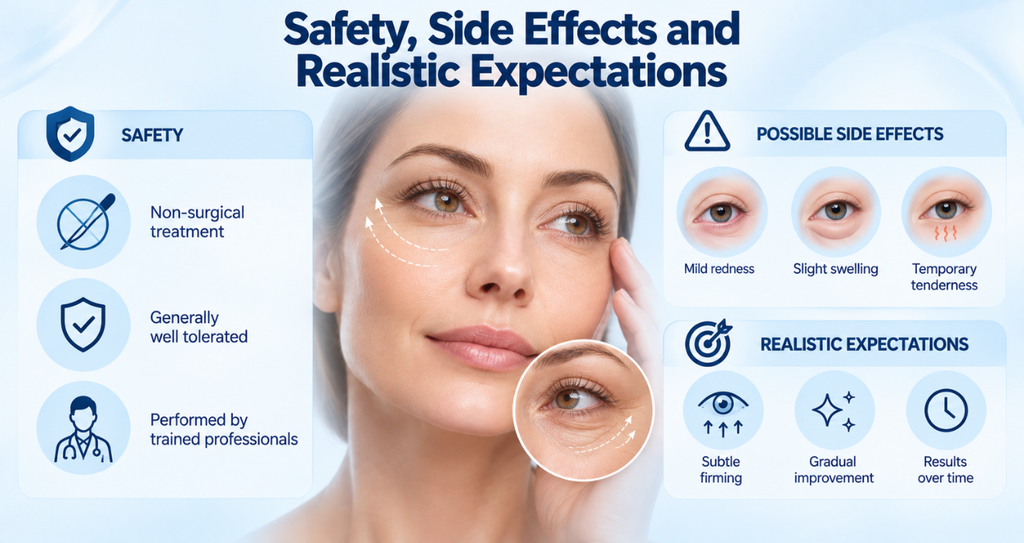
Any energy-based treatment near the eyes deserves caution, because the area is delicate and any visible complication carries a high aesthetic cost.
Plasma Eye Lift
Expected reactions include swelling, redness and carbon crusts that remain for several days. More significant risks include post-inflammatory hyperpigmentation (dark patches), hypopigmentation (light patches), scarring and burns – particularly in medium and darker skin tones (Fitzpatrick III-VI) and when treatment is carried out by non-medical practitioners using unregulated devices. Documented cases of scarring and eye injury underline why plasma should never be performed with consumer or salon pens.
RF Eye Lift
RF generally has a more predictable safety profile. The most common effects are transient redness and mild swelling that settle within a few days. Occasional hyperpigmentation can occur, especially where sun protection is neglected, but serious complications are rare when treatment is performed correctly.
Contraindications for Both
Neither treatment is appropriate during pregnancy or breastfeeding, over active infection or dermatitis near the eyes, or for those with a history of keloid scarring or poor wound healing. Realistic expectations matter too: both treatments improve mild-to-moderate concerns and require ongoing maintenance, but neither halts ageing or replaces surgical blepharoplasty for significant excess skin or fat.
Plasma sculpts the surface; RF firms from within. Neither is a substitute for surgery when there is significant excess skin – and neither is safe as a do-it-yourself procedure near the eyes.
Why Consultation Matters More Than Symptoms Alone
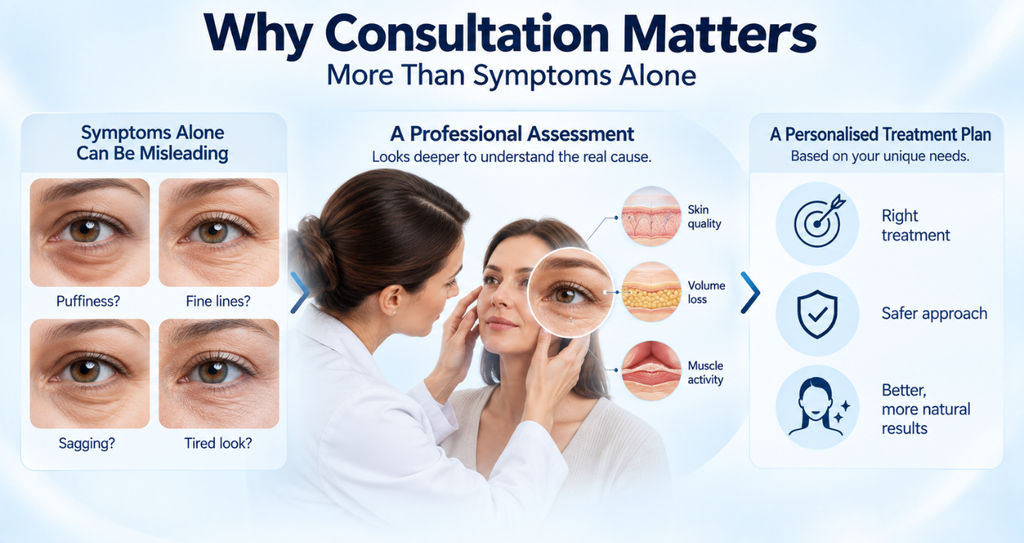
It is tempting to self-diagnose from a mirror and pick a treatment based on a single symptom. In practice, apparent “hooding” may actually be a low brow, and a tired look under the eye can be volume loss rather than loose skin. Each of these needs a different approach – a brow assessment, a filler discussion or simple textural refinement.
A qualified clinician will examine your eyelid anatomy, assess your skin type and rule out issues such as true eyelid drooping (ptosis), which is a medical rather than a cosmetic matter. This is why we always recommend a professional assessment before choosing between Plasma Eye Lift and RF Eye Lift, rather than committing to a treatment based on how a concern looks alone.
Honest counselling should include when non-surgical options are and are not appropriate. If a clinic promises “no risk” or “surgical results without surgery”, treat that as a warning sign and seek a second opinion.
Why Choose Fat Freezing Clinic, Mumbai
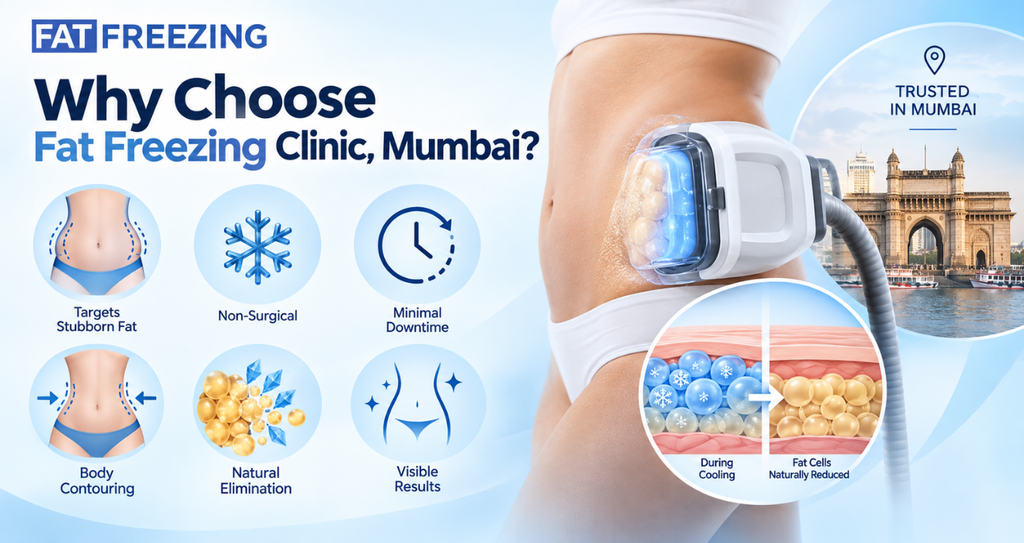
At Fat Freezing Clinic, our philosophy centres on safe, non-surgical treatments and transparent guidance. We take time to understand your concerns, explain what is realistic and recommend only what genuinely suits your skin type and goals – including telling you when a treatment is not right for you.
Our expertise in advanced, non-surgical technology extends across facial and body treatments. If you are exploring rejuvenation, you may also find our wider resources helpful, from understanding the science behind our non-surgical treatments to knowing how non-surgical options compare on safety. For those combining several goals, our guidance on non-surgical body contouring and chin and jawline contouring shows our commitment to considered, individualised care.
If you are researching an eyelid tightening treatment in Mumbai or under-eye rejuvenation, a friendly, no-pressure consultation is the best next step. We will assess your concern properly and set out your options clearly, so you can decide with confidence and without obligation.
To book a consultation or ask a question about non-surgical treatments in Mumbai, contact Fat Freezing Clinic today.
Is a Plasma Eye Lift or RF Eye Lift better for hooded eyelids?
For mild hooding on fair-to-medium skin, a Plasma Eye Lift can offer precise surface tightening. However, significant hooding often relates to excess skin or brow position, which non-surgical treatments cannot fully correct. A professional assessment is essential to identify the true cause before choosing.
Which treatment has less downtime, Plasma or RF Eye Lift?
RF Eye Lift generally has shorter, less visible downtime, typically one to three days of mild redness and swelling. Plasma Eye Lift produces visible carbon crusts that last around four to ten days, with redness sometimes lingering for weeks, requiring careful aftercare throughout.
Is a Plasma Eye Lift safe for darker skin tones?
Plasma carries a higher risk of pigmentation changes in medium and darker skin tones (Fitzpatrick III-VI), so many clinics limit it to fairer skin. RF Eye Lift is generally considered safer across a wider range of skin types, as it largely spares the surface layer.
How many sessions will I need for an RF Eye Lift?
RF Eye Lift usually involves a course of treatments, commonly three to six sessions spaced several weeks apart, to build cumulative collagen remodelling. Early changes appear within weeks, with fuller results over several months. Periodic maintenance helps sustain the improvement over time.
Can these treatments replace surgical eyelid surgery?
No. For significant excess skin, fat herniation or eyelid drooping, surgical blepharoplasty remains the established option. Plasma and RF Eye Lifts suit mild-to-moderate concerns and surface refinement. They can delay or complement, but not replace, surgery when structural correction is genuinely needed.
How long do Plasma and RF Eye Lift results last?
Both offer improvements lasting from several months to a few years, though direct comparative studies are limited. Because skin continues to age, maintenance treatments are usually needed. Plasma is often repeated every two to three years, while RF may be refreshed annually or biannually.
Are Plasma Eye Lifts done at salons safe?
Plasma treatments performed with consumer or salon pens by non-medical practitioners carry a real risk of burns, scarring, pigmentation changes and even eye injury. Plasma near the eyes should only be carried out by trained medical professionals using regulated, medical-grade devices with proper eye protection.
Which is better for under-eye crepey skin?
RF microneedling is frequently favoured for under-eye skin tightening and crepey texture, as its deeper heating firms the dermis while sparing much of the surface. This helps reduce pigmentation risk, though a clinician should confirm suitability based on your individual skin and concerns.
What are the main side effects to expect?
Plasma commonly causes swelling, redness and carbon crusts, with risks of pigmentation change and scarring if mismanaged. RF typically causes transient redness and mild swelling that settle within days. Both require sun protection afterwards. Any spreading redness, pus or severe pain should be reviewed promptly.
Do I need a consultation before booking?
Yes, a consultation is strongly recommended. Concerns that look similar, such as hooding versus a low brow, or laxity versus volume loss, need different treatments. A professional assessment ensures the chosen approach suits your anatomy, skin type and goals, and confirms whether treatment is appropriate at all.
 WhatsApp
 Call Now
 Consultation