
Why Thigh Fat Is Such a Stubborn Concern
Few areas frustrate people more than the thighs. Inner-thigh bulges, outer-thigh “saddlebags” and the “banana roll” beneath the buttocks tend to linger even after months of disciplined dieting and regular exercise. This is because thigh fat is largely subcutaneous and strongly influenced by hormones, making it naturally resistant to reduction through lifestyle measures alone.
This pattern is especially familiar among South Asian populations, where lower-body fat can persist despite a relatively normal body mass index. While thigh fat does not carry the same health risks as visceral abdominal fat, it can significantly affect how clothing fits, contribute to uncomfortable inner-thigh chafing and influence overall body confidence.
For decades, the only effective solution for reshaping the thighs was surgery, whether liposuction or a thigh lift. Both require anaesthesia, incisions and weeks of recovery. Unsurprisingly, a growing number of people now prefer treatments that offer visible improvement without scars, downtime or surgical risk. This is precisely where cryolipolysis for thighs, popularly known as fat freezing, has become one of the most sought-after options in Mumbai.
How Cryolipolysis Works for Thigh Fat
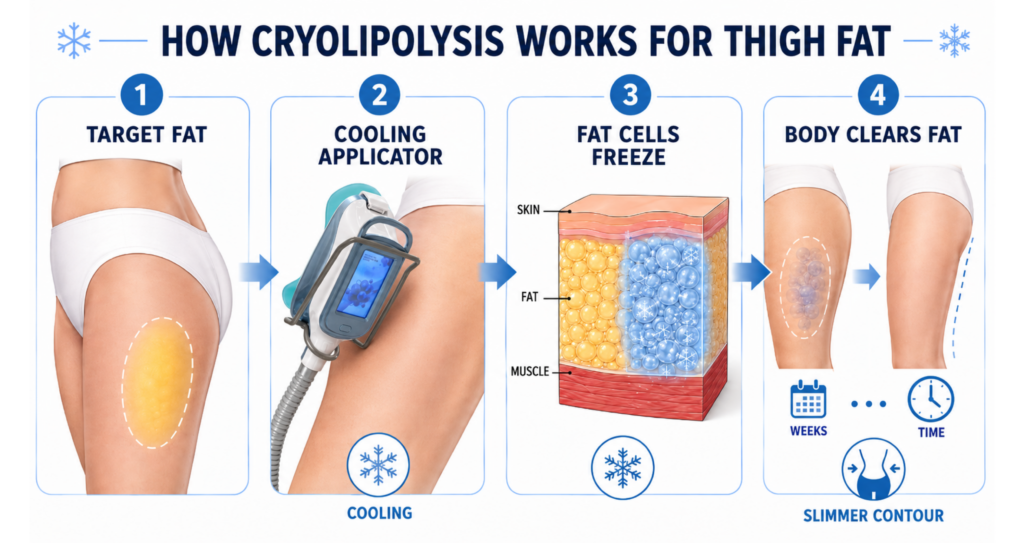
Cryolipolysis is a well-studied, non-surgical technique that uses precisely controlled cooling to reduce localised pockets of subcutaneous fat. The principle is elegantly simple: fat cells are far more vulnerable to cold than the surrounding skin, nerves and blood vessels. Lipid-rich adipocytes crystallise and become damaged at temperatures that water-rich cells such as skin cells tolerate comfortably.
The fat freezing mechanism
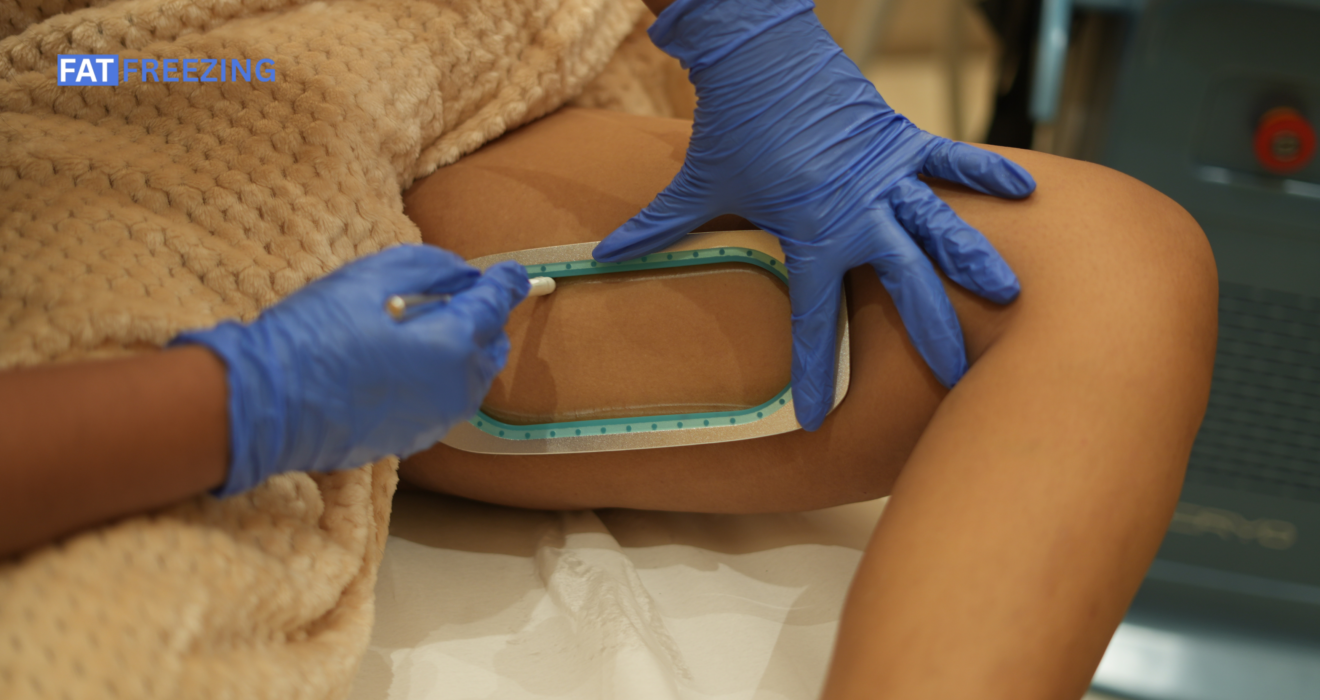
During treatment, an applicator is placed over the targeted thigh bulge. In most systems, a gentle vacuum draws the tissue into a cooling chamber, ensuring even contact, while thermoelectric plates lower the temperature of the fat to a target setting, typically around −8°C, for roughly 35 to 60 minutes. According to research published in peer-reviewed dermatology literature, this controlled cooling triggers a process called delayed apoptosis, or programmed cell death, rather than immediate destruction.
Over the following days and weeks, the body’s immune system recognises the injured fat cells and gradually clears them. Macrophages engulf and digest the dying adipocytes, with the inflammatory response peaking at about four weeks and largely settling by three months. The lipids released are processed naturally by the body, and clinical studies have not found harmful changes to blood lipid levels or liver function as a result. You can read more about the underlying biology in our guide to the science behind cryolipolysis and fat freezing.
Targeted thigh areas
Cryolipolysis can address the inner thighs, the outer thighs (saddlebags) and the banana roll beneath the buttocks. Inner-thigh fat is soft and easily drawn into vacuum applicators, while the more fibrous outer thighs may require larger or surface-based applicators. The result is a gradual, natural-looking slimming of the treated area as the frozen fat cells are eliminated for good.
Expected Results and Realistic Timeline
Understanding the timeline is essential to a satisfying experience. Unlike liposuction, which produces immediate debulking, cryolipolysis results emerge gradually as the body clears the treated fat cells.
Clinical studies and systematic reviews show that a single cryolipolysis session typically reduces local fat thickness by approximately 10 to 25 per cent in the treated area. A landmark inner-thigh study found an average reduction of around 0.9 cm in fat bulge thickness at 16 weeks, with 93 per cent of participants reporting satisfaction with their results.
How many sessions will you need?
Most people require more than one session per thigh for noticeable change, particularly for the more fibrous outer thighs. Many clinics recommend two to three sessions per area, spaced roughly four to eight weeks apart, to achieve optimal contour refinement. Larger or irregular thigh areas may also need multiple overlapping applicator placements within a single session.
When will you see Cryolipolysis results thigh area changes?
- Weeks 1–3: Little visible change, though some feel a slight softening as initial swelling settles.
- Weeks 4–6: Most people begin to notice visible contour differences as fat cells are cleared.
- Up to 3 months: Progressive improvement continues as the majority of apoptotic fat cells are eliminated.
- Up to 6 months: Minor additional refinement can occur, especially after multiple sessions.
Because destroyed fat cells do not regenerate, results can be long-lasting provided you maintain a stable weight. Long-term case reports have documented sustained improvement at six and nine years after treatment. We explore this in detail in our article on whether fat freezing results are permanent.
Cryolipolysis is a sculpting technique that refines localised contours, not a weight-loss method. Even modest centimetre changes can make a meaningful visual difference in how your clothes fit.
Safety, Side Effects and Suitability
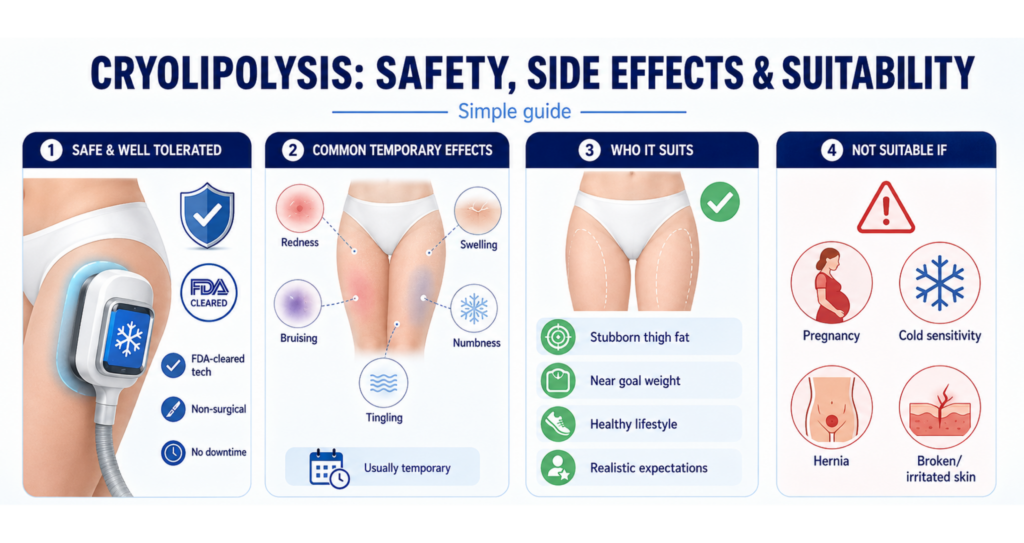
Cryolipolysis enjoys a strong safety record and is generally well tolerated. The treatment offered at our clinic uses FDA-cleared fat freezing technology, providing reassurance about its established safety profile.
Common, temporary side effects
Side effects are usually mild, localised and self-limiting. After thigh treatment you may experience:
- Redness, swelling and temporary firmness of the treated area
- Bruising, particularly where vacuum suction is applied
- Numbness or altered sensation, which resolves over several weeks
- Tenderness or aching, especially when climbing stairs in the first few days
Reassuringly, a study of nearly 400 patients across Fitzpatrick skin types II to VI found no pigmentary changes and no difference in safety between lighter and darker skin tones, leading researchers to describe cryolipolysis as a “colour-blind technology”. This makes it well suited to Indian skin.
A rare but important consideration
One uncommon complication is paradoxical adipose hyperplasia (PAH), where treated fat enlarges rather than shrinks. A systematic review and meta-analysis estimated a pooled incidence of around 0.22 per cent, typically appearing three to nine months after treatment. While rare, it should always be disclosed during consultation, as it may require surgical correction.
Who is a good candidate?
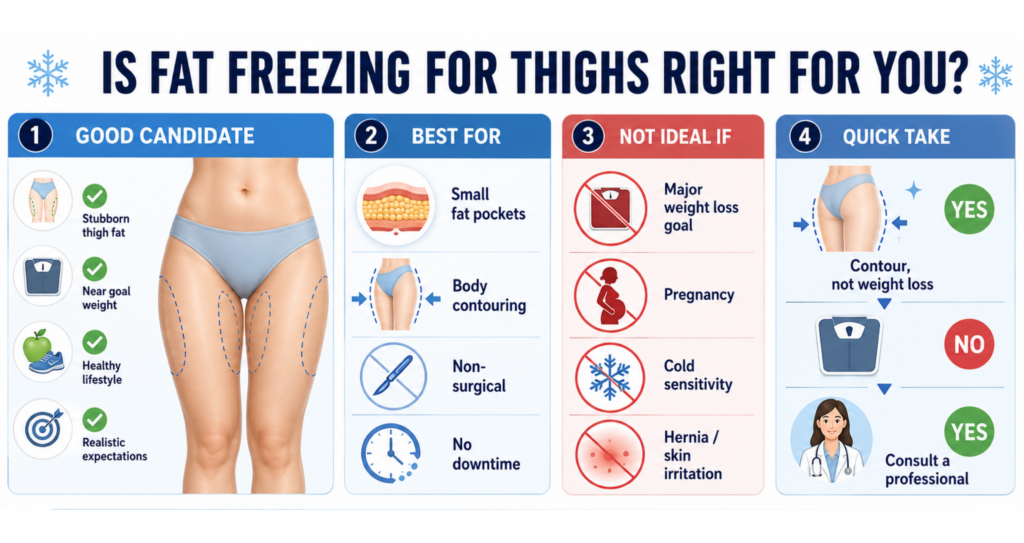
Ideal candidates are at or near their target weight with discrete, pinchable thigh bulges that resist diet and exercise. Cryolipolysis is not suitable for those with cold-sensitive conditions such as cryoglobulinaemia or cold urticaria, nor for pregnant women. For a fuller picture, see our overview of fat freezing safety, side effects and risks.
Is Fat Freezing for Thighs Right for You?
Benefits
- Completely non-surgical with no incisions or anaesthesia
- Minimal downtime – return to normal activities the same day
- Permanently destroys treated fat cells
- Excellent safety record across all skin tones
- Natural, gradual results that avoid a sudden change
- Comfortable, office-based sessions of 35–60 minutes
Considerations
- Results are modest compared with liposuction
- Often requires two to three sessions per area
- Full results take three to six months to develop
- Not a treatment for obesity or weight loss
- Limited effect on cellulite and significant skin laxity
- Small, rare risk of paradoxical adipose hyperplasia
Cryolipolysis Compared With Other Thigh Treatments
When weighing up your options for non-surgical thigh fat reduction, it helps to understand how cryolipolysis compares with other approaches.
| Feature | Cryolipolysis (Fat Freezing) | Liposuction |
|---|---|---|
| Invasiveness | Non-invasive, no incisions | Surgical, requires incisions |
| Anaesthesia | None | Local sedation or general |
| Fat reduction | ~10–25% thickness per session | Several litres possible |
| Downtime | Minimal, same-day return | Days to weeks |
| Risks | Mostly mild and local | Surgical risks, DVT, infection |
Versus HIFU and cavitation
High-intensity focused ultrasound (HIFU) uses focused ultrasound energy to disrupt fat at a precise depth and can also tighten skin, while ultrasonic cavitation breaks down fat cells using sound waves. Both produce mild to moderate reductions of a few centimetres in circumference, similar to cryolipolysis. Radiofrequency (RF) is often preferred where skin tightening and cellulite improvement are priorities, as it directly heats the dermis. In some cases, cryolipolysis is combined with RF in a single session for enhanced results.
Versus liposuction
Liposuction remains the most powerful option for dramatic fat removal but carries surgical risks and significant recovery time. Cryolipolysis is better suited to those seeking incremental refinement of stubborn thigh fat reduction without surgery. For comparisons with other approaches, our article on how fat freezing compares to injections offers further insight, and you can also read about fat freezing versus weight loss injections.

Post-Treatment Care and Tips for Optimal Results
One of the great advantages of cryolipolysis is the near-absence of formal downtime. Most people walk out and resume their day immediately. A few simple aftercare measures help ensure comfort and the best possible outcome.
- Stay active: Light walking encourages circulation and lymphatic drainage, which supports fat clearance.
- Massage the area: Gentle self-massage in the days after treatment can soften tissue and aid comfort. Immediate post-treatment massage by your provider is standard, as research shows it can significantly improve results.
- Stay hydrated: Good hydration supports your body’s natural elimination processes.
- Avoid extremes: Skip saunas, very hot baths and aggressive deep-tissue massage during early recovery.
- Be patient: Results unfold over weeks and months, so resist judging the outcome too early.
Crucially, cryolipolysis permanently removes treated fat cells, but remaining cells can still enlarge if you gain weight. Maintaining a balanced diet and regular exercise is the single best way to protect your investment. Our guide on how to maintain weight loss after non-surgical fat reduction offers practical, lasting strategies.
Why Choose Our Fat Freezing Clinic For Cryolipolysis For Thighs
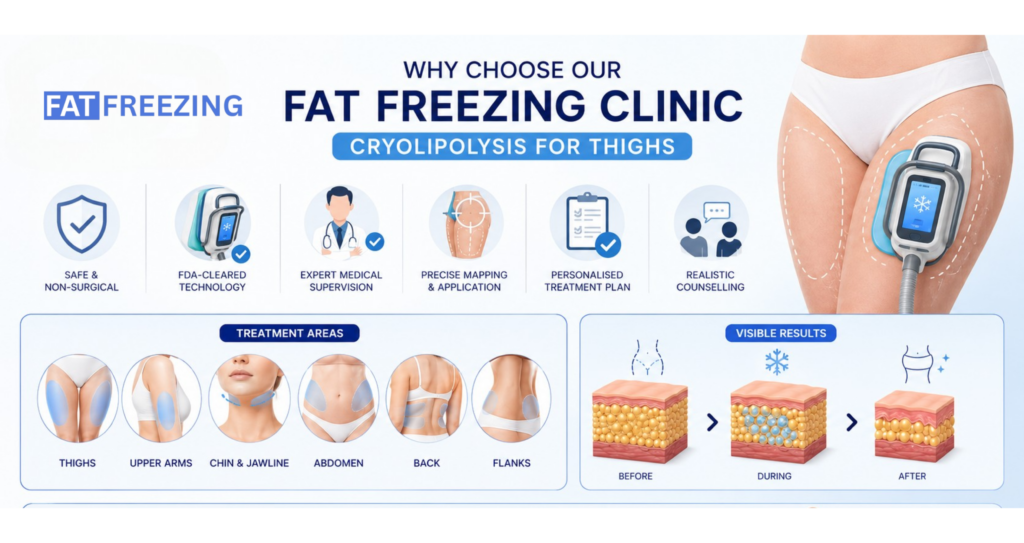
Mumbai has become one of India’s leading hubs for aesthetic medicine, and the outcome of thigh cryolipolysis depends heavily on the expertise behind it. At our Fat Freezing Clinic in Mumbai, we provide safe, non-surgical body contouring Mumbai treatments designed to reduce stubborn fat using advanced cryolipolysis technology.
Thoughtful candidate selection, precise mapping of thigh fat pads, customised cycle numbers and even applicator coverage are all critical to avoiding contour irregularities and maximising fat reduction. Our treatments are carried out using FDA-cleared technology under proper medical supervision, with realistic counselling so you know exactly what to expect.
We also offer cryolipolysis for other common concern areas, from the upper arms to the chin and jawline, and we frequently help new mothers regain their pre-pregnancy shape with post-pregnancy fat freezing. Whether you are addressing the thighs alone or planning a wider body-contouring journey, our team will design a plan around your individual goals.
Ready to Reshape Your Thighs?
For anyone bothered by persistent inner or outer thigh fat that simply will not budge, fat freezing thighs Mumbai treatments offer a safe, effective and non-surgical path to slimmer, more refined contours. With no incisions, no anaesthesia and minimal downtime, cryolipolysis fits neatly around busy professional and family life.
Results are gradual and natural, satisfaction rates are high, and the safety profile is well established across all skin tones. The key to success lies in realistic expectations, an appropriate treatment plan and an experienced provider. Book a consultation with our Fat Freezing Clinic in Mumbai today, and let us help you achieve the toned, confident leg silhouette you have been working towards.
Does cryolipolysis really work on thigh fat?
Yes. Clinical studies show cryolipolysis reduces local thigh fat thickness by roughly 10 to 25 per cent per session. A dedicated inner-thigh study found an average 0.9 cm reduction at 16 weeks, with 93 per cent of participants satisfied. Multiple sessions enhance results for thicker or fibrous fat.
How many cryolipolysis sessions do thighs need?
Most people need two to three sessions per thigh area, spaced four to eight weeks apart, for optimal contouring. Outer thighs and saddlebags often require more cycles than inner thighs because the fat is bulkier and more fibrous. Your provider will tailor the plan to your needs.
When will I see results from thigh fat freezing?
Visible changes usually begin around weeks four to six, with progressive improvement up to three months as your body clears the treated fat cells. Minor additional refinement can continue to around six months, especially after multiple sessions. Patience is essential as results develop gradually.
Is cryolipolysis for thighs safe for Indian skin?
Yes. A study of nearly 400 patients across Fitzpatrick skin types II to VI found no pigmentary changes and equal safety across lighter and darker tones. Researchers called it a colour-blind technology, making cryolipolysis a safe, well-suited option for Indian skin types.
Are the side effects of thigh cryolipolysis serious?
Side effects are usually mild and temporary, including redness, swelling, bruising, numbness and tenderness that resolve within days to weeks. A rare complication called paradoxical adipose hyperplasia, with a pooled incidence around 0.22 per cent, is always disclosed during your consultation for full transparency.
Will cryolipolysis remove cellulite on my thighs?
Cryolipolysis primarily reduces fat volume rather than cellulite. Because cellulite is caused by fibrous bands tethering the skin, fat freezing offers only inconsistent improvement. For significant cellulite or skin laxity, radiofrequency or HIFU may be combined with cryolipolysis for better overall results.
How long do thigh fat freezing results last?
Because destroyed fat cells do not regenerate, results can be long-lasting. Long-term case reports show sustained improvement at six and nine years. However, remaining fat cells can enlarge with weight gain, so maintaining a stable weight through diet and exercise is essential for durable results.
Is cryolipolysis better than liposuction for thighs?
It depends on your goals. Liposuction removes far more fat but requires surgery, anaesthesia and weeks of recovery. Cryolipolysis offers modest, gradual reduction with no incisions and minimal downtime, making it ideal for those seeking incremental refinement of stubborn thigh fat without surgery.
Is there any downtime after thigh cryolipolysis?
There is virtually no formal downtime. Most people resume normal activities, including light work and walking, immediately after a session. Some experience temporary heaviness or tenderness that may make stair climbing or vigorous exercise uncomfortable for a day or two, but this quickly settles.
Can cryolipolysis help with weight loss?
No. Cryolipolysis is a body-contouring treatment, not a weight-loss method. It targets discrete pockets of stubborn fat and produces negligible change in overall weight or BMI. It works best for people near their target weight who want to refine specific areas like the thighs.
 WhatsApp
 Call Now
 Consultation