

The Science Behind Cryolipolysis: How Fat Freezing Targets Stubborn Fat Cells
For many people, there are areas of body fat that seem resistant to healthy eating and regular exercise. These localised deposits, often found around the abdomen, flanks, thighs, upper arms or under the chin, are a common reason people explore non-surgical fat reduction. One of the best-known options is Cryolipolysis, often called fat freezing treatment.
Unlike weight-loss programmes, Cryolipolysis is designed for body contouring rather than reducing overall body weight. Its appeal lies in a simple but powerful scientific principle: fat cells are more vulnerable to cold injury than many surrounding tissues. By applying controlled cooling to a defined area, a Cryolipolysis device can trigger gradual fat-cell death without surgery, needles or the recovery associated with liposuction.
This article explains how cryolipolysis works at a cellular level, the technology used during treatment, what the evidence says about effectiveness, and what patients should realistically expect. Where medical claims are made, they are supported by reputable sources such as peer-reviewed clinical research, review articles in medical journals, FDA information and trusted medical organisations including Cleveland Clinic and Harvard Health.
If you are comparing options for a stubborn area such as the waist, you may also find our guide on whether Cryolipolysis is a good option for love handles useful.
What Is Cryolipolysis?
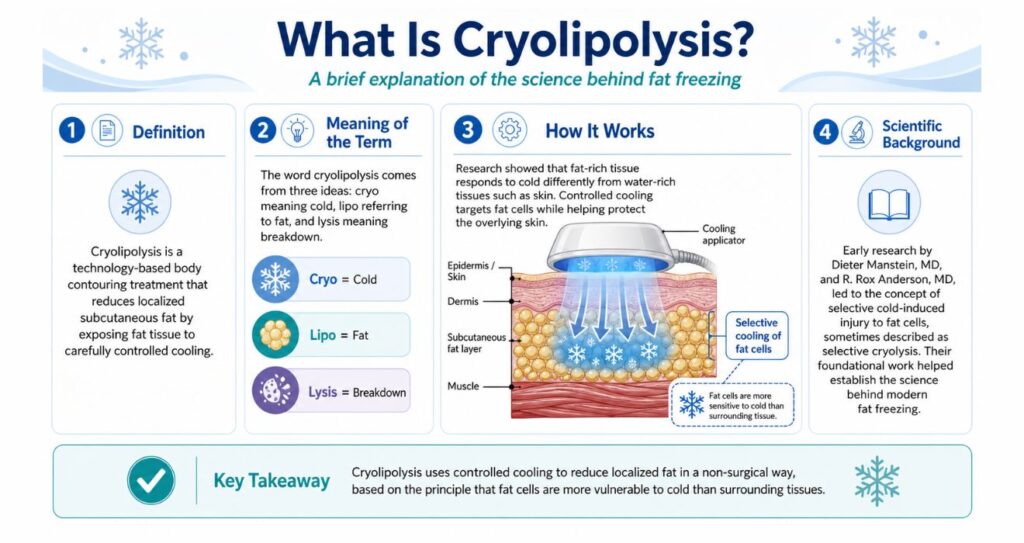
Cryolipolysis is a technology-based body contouring procedure that reduces localised subcutaneous fat by exposing fat tissue to carefully controlled cooling. The term comes from three root ideas: cryo meaning cold, lipo referring to fat, and lysis meaning breakdown.
The treatment was developed after researchers observed that fat-rich tissue can respond to cold differently from water-rich tissues such as skin. Early work by Dieter Manstein, MD, and R. Rox Anderson, MD, led to the concept of selective cold-induced injury to adipocytes, sometimes described as selective cryolysis. Their foundational research helped establish that controlled cooling could reduce fat without causing unacceptable injury to the overlying skin, which formed the basis of modern fat freezing science.
Today, Cryolipolysis is widely used as a fat freezing treatment for contouring specific body areas. It is not a treatment for obesity, and it does not replace lifestyle measures. Instead, it is best understood as a targeted method for reducing small to moderate pockets of pinchable fat.
The Science Behind Cryolipolysis
Why fat cells respond to cold
The key to fat freezing science is that adipocytes, or fat cells, are relatively rich in lipids. These lipids can undergo changes when exposed to low temperatures. In contrast, the skin, blood vessels, nerves and muscles in the treatment area have different structural and thermal properties, which makes them less susceptible to the same level of cold-related injury when temperatures are tightly controlled.
Research published in Lasers in Surgery and Medicine and summarised in clinical reviews on PubMed Central shows that cooling fat tissue can lead to a delayed inflammatory response followed by a reduction in the thickness of the fat layer over the following weeks and months.
What happens at a cellular level
The process does not simply ‘freeze fat away’ instantly. Instead, Cryolipolysis creates a controlled cold stress that initiates a biological sequence:
- Cooling of the targeted fat layer: The applicator draws the tissue into a cup or plates and lowers the temperature in a controlled way.
- Cold-induced injury to adipocytes: Fat cells experience crystallisation-related and metabolic stress.
- Apoptosis begins: Rather than bursting dramatically, many adipocytes enter apoptosis, a programmed form of cell death. This is an orderly biological process, not the kind of traumatic tissue destruction seen in surgery.
- Inflammatory clearance: Over days and weeks, inflammatory cells and macrophages move into the area and begin clearing damaged fat cells.
- Gradual fat reduction: The body processes and removes the cellular debris through normal metabolic pathways, leading to visible slimming of the treated area over time.
This explains why cryolipolysis results are not immediate. The body needs time to recognise, process and eliminate the affected adipocytes. Clinical studies commonly report visible changes from around 6 to 12 weeks, with continued improvement in some patients beyond that window.
Does the body eliminate the fat safely?
Yes, in properly selected patients, the body gradually clears the treated fat cells through natural inflammatory and lymphatic processes. Available studies have not shown clinically meaningful harmful changes in blood lipids or liver function when treatment is performed appropriately. A frequently cited review in Seminars in Cutaneous Medicine and Surgery notes that Cryolipolysis has a favourable safety profile for localised fat reduction.
It is important to understand that this is a gradual housekeeping process rather than rapid drainage. The body is not suddenly overwhelmed with fat. Instead, cell fragments are removed in a slow, controlled way.
How Fat Freezing Treatment Is Performed
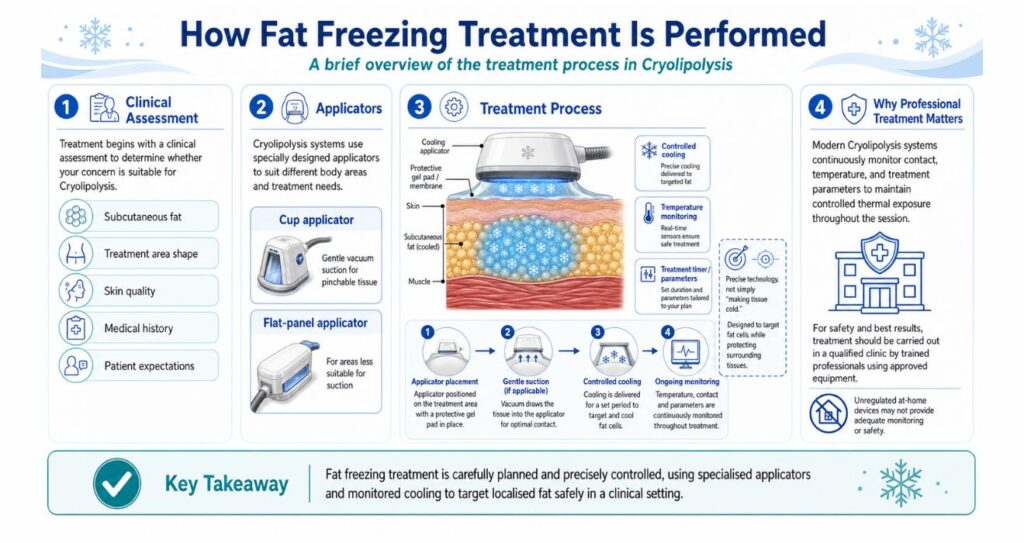
A typical fat freezing treatment begins with a clinical assessment to check whether the concern is suitable for Cryolipolysis. The practitioner evaluates the amount of subcutaneous fat, the shape of the treatment area, skin quality, medical history and patient expectations.
Applicators and cooling technology
Cryolipolysis systems use specially designed applicators to fit different body areas. Some are cup-shaped and use gentle vacuum suction to pull tissue into the applicator, while others use flat-panel designs for areas that do not suit suction as well. The device then delivers controlled cooling energy for a set period.
Although people often describe the treatment as ‘fat freezing’, the technology is far more precise than simply making tissue cold. Modern systems monitor contact, temperature and treatment parameters to maintain a controlled thermal exposure. This is one reason treatment should always be carried out in a qualified clinic rather than attempted through unregulated at-home alternatives.
At Fat Freezing Clinic in Mumbai, Cryolipolysis is used as part of a non-surgical body contouring approach for patients who want to reduce stubborn fat without surgery. If you are still assessing suitability and safety, our article on fat freezing treatment safety and risks offers additional context.
What does treatment feel like?
Patients commonly feel intense cold, firm pressure from the applicator and some pulling at the start of the session. As the area becomes numb, discomfort usually settles. After the applicator is removed, the treated area may be massaged. Some studies suggest that post-treatment manual massage can improve fat reduction, although the exact benefit may vary by device and protocol.
Common treatment areas
- Abdomen
- Flanks or love handles
- Thighs
- Upper arms
- Back and bra-line fat
- Submental fat under the chin
If you are mainly interested in long-term expectations, see our guide on how long fat freezing results can last.
Benefits and Considerations of Cryolipolysis
Benefits
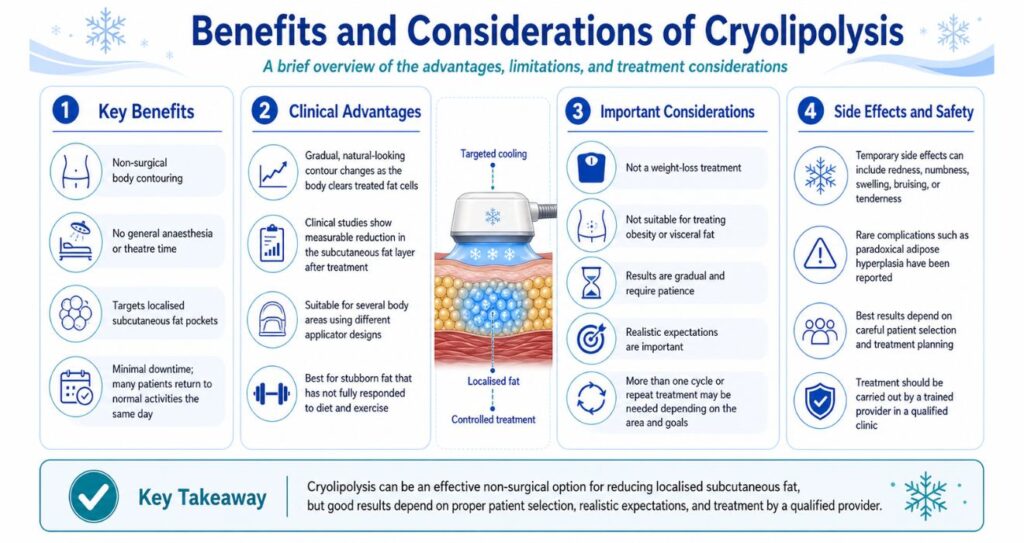
- Non-surgical fat reduction with no incisions, general anaesthetic or theatre time.
- Targets localised, stubborn fat pockets that have not responded fully to diet and exercise.
- Minimal downtime, with many patients returning to routine activities the same day.
- Gradual, natural-looking contour changes as the body clears treated adipocytes.
- Clinical studies have shown measurable reductions in the subcutaneous fat layer after treatment.
- Suitable for several body areas using different applicator designs.
Considerations
- Not a weight-loss treatment and not suitable for treating obesity or visceral fat.
- Results are gradual, so patients need patience and realistic expectations.
- More than one cycle or repeat treatment may be needed depending on the area and goals.
- Temporary side effects can include redness, numbness, swelling, bruising or tenderness.
- Rare complications such as paradoxical adipose hyperplasia have been reported.
- Best results depend on careful patient selection and treatment by a trained provider.
What Clinical Evidence Says About Effectiveness
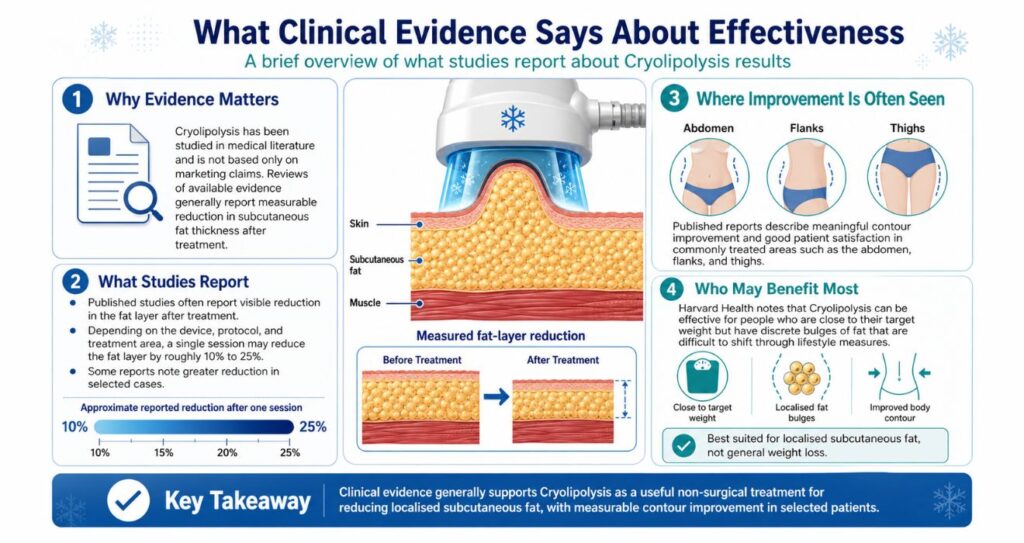
One reason Cryolipolysis remains popular is that it has been studied in peer-reviewed literature rather than relying only on marketing claims. Reviews of available evidence generally report a measurable reduction in subcutaneous fat thickness after treatment. Depending on the device, protocol and area treated, studies often find an average visible fat-layer reduction of roughly 10% to 25% after a single session, with some reports noting greater reductions in selected cases.
For example, published studies referenced in medical literature reviews describe meaningful contour improvement and good patient satisfaction in treated areas such as the abdomen, flanks and thighs. Harvard Health also notes that Cryolipolysis can be effective for people who are close to their target weight but have discrete bulges of fat that are difficult to shift through lifestyle alone.
That said, effectiveness is not identical for every person. Variables include:
- The thickness and density of the fat layer
- The body area being treated
- The fit and placement of the applicator
- The number of treatment cycles performed
- Individual biological response and lifestyle after treatment
Patients with firm expectations of dramatic volume reduction may be better served by surgery, while patients seeking moderate, non-invasive contour improvement are often more satisfied with Cryolipolysis.
Different body types and treatment response
Cryolipolysis tends to work best for people with localised, pinchable subcutaneous fat. It is less suitable when the main concern is loose skin, generalised obesity or internal visceral fat around the organs. For patients with a combination of stubborn fat and broader weight concerns, treatment planning may include lifestyle support or other technologies. Our article on why weight loss can be difficult and how fat reduction fits in explores that distinction in more detail.
What Results Can You Expect?
The most important point is that results are gradual and subtle rather than instant. Many patients begin noticing changes after several weeks, with more obvious contour improvement by around two to three months. Clothing fit, waistline definition and side-profile shape are often more meaningful measures than scale weight.
Once fat cells are cleared, they do not simply grow back in the treated area in the same numbers. However, remaining fat cells can still enlarge if calorie intake exceeds expenditure over time. In other words, Cryolipolysis can reduce the number of fat cells in a treated zone, but maintaining results still depends on long-term habits.
If budget planning is part of your decision-making, you can also read our guide on fat freezing treatment costs in India.
How does Cryolipolysis compare with weight loss?
| Goal | Cryolipolysis | Diet and exercise |
|---|---|---|
| Reduce localised fat bulges | Yes, targeted | Sometimes, but spot reduction is limited |
| Lower body weight overall | No | Yes |
| Improve metabolic health markers | Limited direct effect | Yes, often significantly |
| Immediate visible change | No, gradual | Gradual |
Safety, Side Effects and Rare Risks
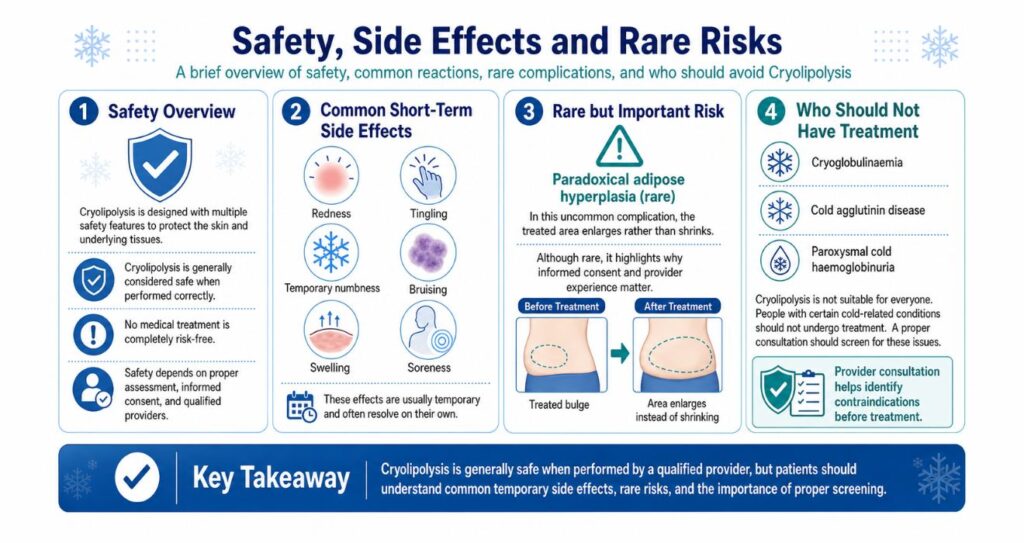
Cryolipolysis is generally considered safe when performed correctly, but no medical aesthetic treatment is risk-free. Common short-term effects include redness, firmness, tingling, temporary numbness, bruising, swelling and soreness in the treated area. These effects usually resolve on their own.
A rare but important complication is paradoxical adipose hyperplasia, in which the treated area enlarges rather than shrinks. This has been discussed by sources including UCLA Health. Although uncommon, it is one of the reasons informed consent and provider experience matter.
Cryolipolysis is also not suitable for everyone. People with certain cold-related conditions, such as cryoglobulinaemia, cold agglutinin disease or paroxysmal cold haemoglobinuria, should not undergo treatment. A proper consultation should screen for these issues. For a fuller discussion, see our article on fat freezing side effects and what to know before treatment.
Cryolipolysis does not melt fat overnight; it uses controlled cooling to trigger a slow, biologically guided reduction in targeted fat cells.
Why Expertise and Assessment Matter
Because Cryolipolysis is a medical aesthetic treatment, outcomes depend on more than the machine alone. Good results rely on accurate patient selection, choosing the right applicator, safe positioning, realistic treatment planning and clear follow-up advice. This is where YMYL and E-E-A-T principles become especially important: patients need evidence-based information, transparent communication and treatment from providers who understand both the technology and its limitations.
At Fat Freezing Clinic, the most suitable candidates are usually those who are already making healthy lifestyle choices but want help with specific stubborn areas. A consultation should cover your goals, treatment suitability, possible side effects, expected timeline and whether one or more sessions may be appropriate.
If you are considering a contouring treatment, the next sensible step is not to chase the coldest device or the fastest promise, but to book a professional assessment. A personalised consultation can help determine whether Cryolipolysis is right for your body shape, goals and medical history.
Conclusion
The science behind Cryolipolysis is grounded in selective cold-induced injury to fat cells. Through controlled cooling, the treatment triggers apoptosis in vulnerable adipocytes, after which the body slowly clears them through natural inflammatory processes. That is why fat freezing treatment can reduce stubborn, localised fat without surgery and with minimal downtime.
Clinical evidence supports Cryolipolysis as an effective option for carefully selected patients seeking moderate, non-surgical fat reduction. It is not a weight-loss shortcut, and it is not suitable for everyone, but it can be a valuable body contouring treatment when expectations are realistic and care is delivered appropriately.
If you would like expert guidance on whether Cryolipolysis may suit your goals, book a consultation at Fat Freezing Clinic. A personalised assessment can help you understand the likely benefits, limitations, treatment plan and expected cryolipolysis results for your body.

What is Cryolipolysis in simple terms?
Cryolipolysis is a non-surgical fat reduction treatment that uses controlled cooling to target and damage fat cells beneath the skin. Over the next few weeks and months, the body gradually clears these cells, which can slim the treated area.
How does Cryolipolysis work at a cellular level?
The cooling exposure places stress on adipocytes, or fat cells, which are more cold-sensitive than many nearby tissues. This triggers apoptosis, a programmed form of cell death. The body then removes the affected cells through normal inflammatory and lymphatic processes. Peer-reviewed evidence on PubMed and PubMed Central describes this delayed biological response.
How long does it take to see cryolipolysis results?
Many patients start to notice changes from around 6 weeks, with more visible cryolipolysis results often appearing between 8 and 12 weeks. Because the body needs time to process and eliminate the treated fat cells, improvement is gradual rather than immediate.
Is fat freezing treatment permanent?
The fat cells removed by Cryolipolysis are gone permanently. However, the remaining fat cells in the area can still enlarge if a person gains weight. Maintaining a stable lifestyle supports longer-lasting contour results.
Is Cryolipolysis safe?
When carried out by a trained provider on a suitable candidate, Cryolipolysis has a generally favourable safety profile. Temporary redness, swelling, numbness and tenderness are common short-term effects. Rare risks, including paradoxical adipose hyperplasia, should be discussed during consultation. Trusted overviews from Cleveland Clinic and Harvard Health provide further context.
Does Cryolipolysis help with weight loss?
No. Cryolipolysis is designed for localised body contouring, not general weight loss. It can reduce stubborn fat pockets, but it does not replace a healthy diet, physical activity or medically supervised weight management where needed.

 WhatsApp
 Call Now
 Consultation